Ten children from Belarus will be spending time in Stone this summer to help them recover from cancers caused by the Chernobyl nuclear disaster. The visit is part of the work of the Chernobyl Children’s Project and the local co-ordinator is Margie Hislop. Here, Margie explains the project, her experiences with Belarusian children last year and makes an appeal for help to make their stay in Stone a huge success. It’s a lengthy post. But it’s brilliant. Please read and please help if you’re able

The Chernobyl Children’s Project (CCP) is an international charity which aims to improve the lives of the children of Belarus, who are still affected by the explosion at the Chernobyl nuclear power plant on 26th April 1986.
Many people think that because this was 25 years ago it is all over now and the effects of the radiation are now much diluted. True to some extent, the worst affected are now dead but the radiation remains. Radioactive isotopes can take many years to decay so, for example, if a half-life,(the time taken to decay to half its original value) is 50 years we are now at 25 years on, only half-way to half the original level of radiation (sorry, once a teacher always a teacher. I can’t help it!). There is an exclusion zone around the old reactor and works still goes on to secure and repair the original containment but many isotopes are still very active in the area.
Due north of Chernobyl is the Gommel region of Belarus. This is probably the poorest part of what was the USSR. Still in many villages the houses do not have basic facilities such as running water. Many of the people there are so poor they cannot afford to buy the water and fresh foods imported to the area so they eat what they grow and drink the groundwater, both of which dose them further with more radioactive isotopes. When the wind blows from the south the villages get another coating of radioactive dust. Contrary to the belief of many people this will go on for years to come because of the long half-lives of many of the radioactive isotopes.

The original “nasty” was radioactive iodine which is incorporated into the body by the thyroid gland as it makes thyroxine, the hormone which regulates our metabolic rate (ooops! Teacher again!). Initially this gave rise to many thyroid cancers across the population. Now a greater variety of cancers are seen.
The two little boys, Kiril and Yegor, both nine, who stayed with us, were in remission from leukaemia. Veronica, a little girl of eight, had had a spinal tumour which had affected the strength and control she had of her arms. Alana, nine, had had lymphoma. Vasia, the doctor who accompanied them said that on average he loses 20% of the children in his care to cancers as they reach puberty.
The charity works on several fronts. Children are born with deformities to parents who themselves were irradiated as children. Some of these parents have also become ill with cancers and some feel they have to abandon their children to orphanages because they cannot cope with their illnesses and that of their child. The charity builds and staffs orphanages but better still builds sheltered accommodation where such families can be re-united and live together with appropriate levels of support.
Many children are orphaned as their parents die of cancers sooner than expected. As children grow to young adults there is now a need for a different type of facility which the charity is working to provide, a sheltered accommodation for young adults until they can live independently. All this goes on in Belarus, especially in the Gommel region.
Groups across Europe and the UK receive children (between eight and 12), teenagers or mothers will sick toddlers to give them a break from the radiation. It is believed by paediatricians that a month’s break with air, water and food clean from radioactive isotopes will enhance their immune system for up to two years. Usually, unless a youngster is in dire need, they only get the opportunity of one holiday. The Stafford and Stone CCP group received a group of 10 children last summer. We could only find five families willing to host. Each family takes two children for two weeks. We shared our little visitors with another CCP group with the same difficulties in Wilmslow. The children came to us accompanied by Lizaveta, the interpreter, and Vasia, their doctor, who were both available 24/7.
We had to raise funds to get the children over here. They fly from Minsk after a five-hour train journey. Tickets cost £500 each and there was also the costs of visas to find. We raised funds too to give them an events programme while they were here and many people were extremely generous, not only in hard cash terms, but with gifts.

The children are in need of basics such as clothes and shoes. We had donations of superb outgrown clothes. The little fruit shop in the centre of Stone near Market Square gave us fruit for each child twice each week. The children love fresh fruit and Kookoorooooooza (sweet corn) which they eat as a snack at any time of day.
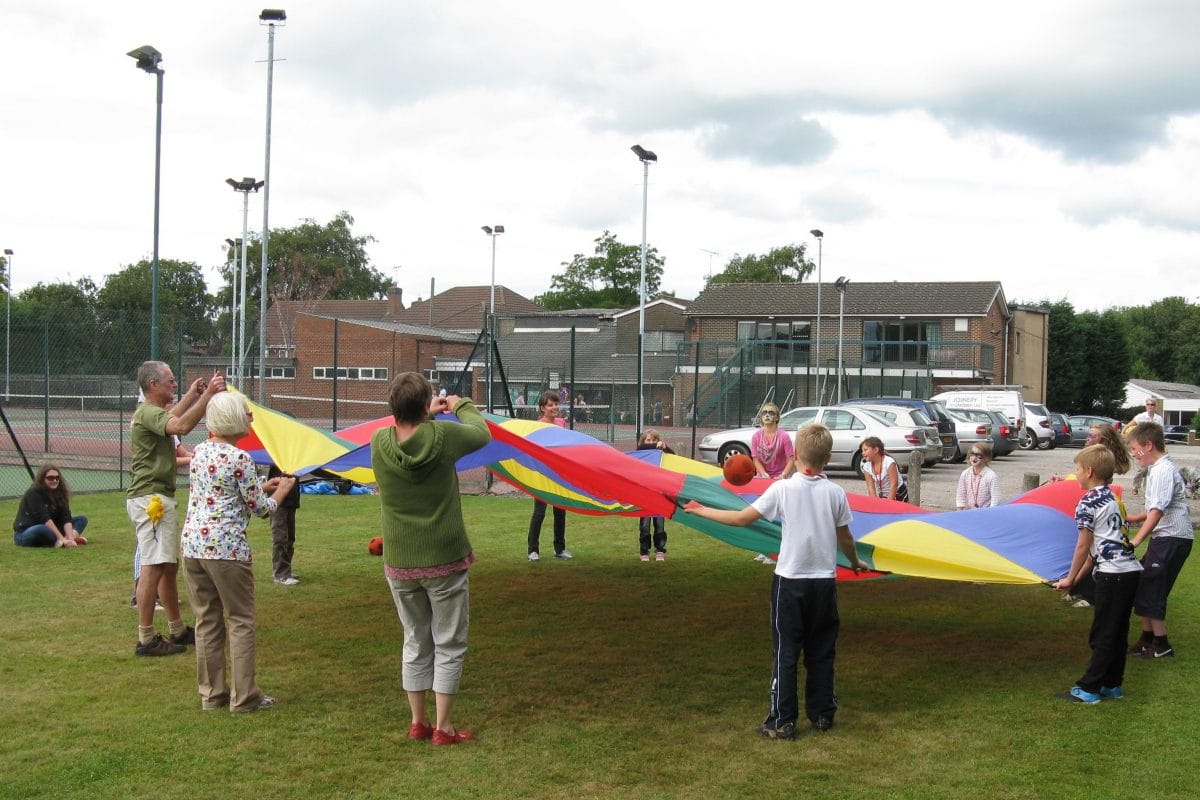
Trentham, Shugborough and the Foxfield Railway gave us free entry. Lucas and Webb, the opticians in Stafford, checked out their eyes for free. A few years ago an optician found a tumour in one child’s eye which was then successfully treated. They only have access in school to a very basic screening, almost the equivalence of reading a number plate at 20 paces. Kiril was found to have virtually no 3D vision (Dwain’s syndrome), perhaps totally un-related to the radiation but hitherto undetected. I had noticed how clumsy he was when doing tasks requiring fine motor skills, eg building a model plane.
The Stafford and Stone CCP group want to carry on this year but this time with 10 host families (plus one reserve) and accommodation for the interpreter and the doctor.
Can we ask for more help? I am in danger of “doing a Geldof” here but I promise to keep my language moderate!
1) Money for plane tickets and visas, clothing, a programme of events for the group when they are here. Money surplus to the needs of the visit goes back to the main charity and is used in Belarusian projects
2) Could you hold a fundraising event?
3) Do you know of bodies who would consider supporting us?
4) Could you host two children for two weeks? The visit is usually at the end of July and early in August. It is very tiring to host but is great fun. On most days there is a whole group activity of some kind which gives you a break once it gets rolling. Language is the major difficulty unless you speak Russian but we all managed it, working out our own code system and learning some Russian phrases – Te lubish plavat? /Would you like to swim? This was a very popular and useful phrase! We would also mime and draw pictures. It was FUN!!!!! It becomes an ongoing game. The hosts which found life a little easier were hosts with children of a similar age. Children have few hang-ups and just pitch in and get on with it. I saw so many thoughtful and kind strangers during the visit, both adults and children.
5) Have you items you could donate for a car boot sale?
6) Have your children got any outgrown but not outworn clothes or shoes, wellies, trainers or walking boots which we could use for this age group? Liza, the interpreter, told them as they packed their cases that clothes not toys were to take priority. Kiril and Yegor looked for clothes for their brothers in Belarus. I thought this odd as I had believed that they were both only children but in Belarus your cousins are also your brothers. We found them the biggest wheeled cases we could for if they could pull it they could take up to 30kg. Yegor weighed less than his luggage allowance of 30kg! Kiril wanted to pack Sophie, one of our dogs. In our loft we now have a clothing bank for 8-12 year olds ready for future visits.
7) Have you any unwanted toys such as board games or puzzles, especially those not needing language? Games like Buckaroo, Jenga and Operation are good. What about outgrown children’s DVD’s? We found much to our surprise that we had Mr Bean’s Holiday with Russian subtitles! Fantasia worked well but they also liked Disney films such as Monsters Inc. (so did we)!
8) Could you entertain the group? Perhaps a barbeque and games or perhaps you have access to a swimming pool or bowling alley? Perhaps you have a contact in farming who could organise a farm visit for us?
I will not pull my punches, it was an exhausting fortnight. Basically if you host you give these children a fortnight of your life which in the big picture is very little, especially if one considers what we have in terms of material goods, freedom and choices that they do not have.
Some years ago Walton High School, Stafford, had a Ukrainian exchange and we hosted one of the Ukrainian English teachers, Oksana. One evening, despite me calling her twice, she did not join us for tea. I went up to her room where I thought she had gone to freshen up after a day at work and I could hear her sobbing. I knocked and slowly entered. She was embarrassed and very low in spirit. My immediate thought was that I had upset her or inadvertently insulted her. She sensed this from the look on my face. I shall never forget what she said to me for it stopped me in my tracks. She said: “It is not your fault. You are not showing off. This is how it is.”
She had become completely overwhelmed by what she had seen over here. Her parents had not wanted her to make the journey for this reason. She is now married to an American and teaches English to Ukrainian immigrants in the States. Put on top of her difficult life in the Ukraine, which was similar to that in Belarus today, the fallout from the world’s worst nuclear disaster and I began to get a picture of how tough life is out in Belarus, limited choices and opportunities compounded by living with radiation which constantly gnaws at the immune systems of even healthy people. Oksana made me realise how incredibly lucky I was to have been born here and how I should not take for granted what we have.
This is why I decided to join the Stafford and Stone CCP group and hope that perhaps you will consider joining us as an active member or support our fundraising. At very least, thank you for taking the time to read this, but hopefully, thank you for your support.
Please email me at margie.haslop@btconnect.com if you can help in any way






6 comments
Jonty Beard
We’re both here racking our brains for ways we could possibly help. Right now we can only really offer our time but if it’s any help we have many ideas (unsure of how to proceed with them though) and I’ve started cramming through the Russian Rosetta Stone (not sure how good I’ll be with it but hey it might help). We’ll be in touch with Margie regardless though to at least pass on ideas and discuss possibilities and hopefully others will too.
jvictor7
Thanks Jonty. Any help will be much appreciated I’m sure
Soupdragon
This post has tugged at my heart strings and I’d like to know more please.
jvictor7
Hi there. You can get in touch with Margie by ending her an email. Her address is listed in the post
sharon
I would love to help in some way.. I will have a good think over the easter break and see what I can come up with..:)
Little Bit of Stone
Thanks Sharon – I know you’re a seasoned fundraiser so your help would be much appreciated 🙂