


We’ve asked the candidates for the Stone constituency for the General Election on 7th May to send us their election pitches, and to answer some specific local questions relating to the town. Click HERE to see all of the candidates’ pitches. Here’s what ANDREW ILLSLEY, UKIP’s candidate, has to say…
[divider]
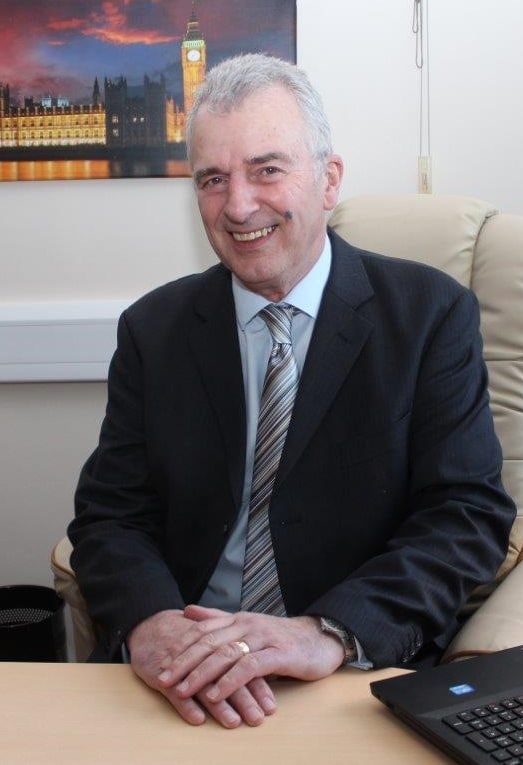
[dropcap]I[/dropcap]’m delighted to have been selected as your prospective UKIP MP.
I have lived in Stone for over 27 years and am married with 2 adult children and 2 grandchildren. This has provided me with a great empathy for this area. During this period, I worked in ceramics as a director of a well-known PLC then set up my own business.
Becoming interested in the challenge to put people before politics I was UKIP’s candidate for the 2010 campaign. This gave me an introduction into politics which, combined with my life experience and ethic for hard work, makes me believe that I could achieve a lot for Stone constituency as its Member of Parliament.
Stone constituency has so much to offer but has its fair share of issues too:
- The decline of Stafford Hospital is truly shocking. I’ll do all I can to restore much needed services for this area
- My support of local opposition to HS2 is relentless. Vigorous local campaigns and petitions must be heard so that this unnecessary project which we simply can’t afford is scrapped.
- Protecting our wonderful green landscapes from new housing schemes and campaigning against wind turbines are both matters on which I want local people’s voices to be heard.
Here is a summary of what UKIP Offers that the others can’t – or won’t.
- End tax on the minimum wage
- Cut unemployment by stopping unskilled British jobs being advertised overseas and encouraging employers to prioritise local people for local jobs
- Bring immigration back under control by leaving the EU and introducing a points based immigration system – such as they have in Australia – so everyone, whatever country they come from, is treated equally
- Keep the NHS free at the point of entry for all UK residents. Provide additional £3 billion per year for more clinical staff and oppose hospital car parking charges which have become a tax on the sick
- Scrap green taxes and subsidies introduced by Ed Miliband saving you £100s on your annual energy bills
- Introduce a “Local Homes for Local People” policy so people with strong links to an area will get social housing priority
- Cut wasteful foreign aid spending and invest in Defence, the NHS, Education and Policing
- Give YOU the final say on the big local issues by offering the chance to hold binding referendums on issues important to you.
It’s time for change; shake up the same old parties who’ve forgotten who they represent. Please join me in my own and UKIP’s efforts to do just that. For a Better Britain and Better local community. VOTE UKIP ON 7th MAY.
QUESTION TIME
Before addressing the questions that have been posed by the “A Little Bit of Stone” website, it is worth reminding ourselves that the Stone Parliamentary constituency is much larger than Stone itself. It is understandable that this website, titled as it is, naturally focuses on Stone but the constituency also includes:
- Madeley in the north west corner
- Cheadle in the north east corner
- Loggerheads in the west
- Eccleshall near the middle
- Weston and Stowe by Chartley in the east
- Gnosall, Gnosall Heath and Haughton in the south.
In-between, there are numerous villages and small towns which all go to make up this geographically large constituency. If elected Andrew Illsley, your UKIP candidate, will always consider the whole constituency, not just the town from which it takes its title.

UKIP has a policy of introducing local referendums if 5% of the local population demand it by petition. Thus, with a UKIP controlled council, the opinions of local people would be taken into account before going ahead with any of the ideas discussed below…
1.) Stone is a growing town, with thousands of new homes to be built over the next few years. What needs to be done to make sure the local infrastructure can cope?
In a nutshell; plan properly. Ensure that infrastructure is planned to accommodate the new residents. “Infrastructure” covers many different things including:
- Roads and traffic management including proper maintenance of existing roads such as pothole repairs
- Adequate schooling for a growing local population
- Access to hospitals and medical services – we oppose the reduction in services at Stafford hospital
- Leisure facilities for all ages
- Refuse collection and disposal including recycling as appropriate
- Electricity, gas, water, sewerage systems. These services don’t just happen, they have to be planned at the local and national levels. Electricity is a good example where the possible closure of reliable coal fired power stations, such as Rugeley, and replacement with unreliable wind and solar generation will make security of electricity supply ever more precarious.
UKIP has a policy of protecting green spaces by opposing excessive housing development and encouraging building on brownfield sites wherever possible. Provide incentives to re-use empty homes.
UKIP is opposed to the “bedroom tax”.
2.) What needs to be done to improve the town centre economy to attract new businesses and support existing traders?
- Reduce tax and local business costs
- Consider carefully the effects on existing business when contemplating schemes such as that proposed for Westbridge Park. The addition of an M&S food store may sound attractive but its effect on local existing business must be carefully considered
- Make it easier for small local firms to tender for local authority contracts.
3.) What’s the best way to improve leisure facilities in the town?
Leisure facilities take many forms. This area (not just Stone) has many good pubs, restaurants and cafes. Such businesses are to be encouraged. Green spaces where people can stroll at leisure are important. This area has good access to theatres and cinemas in nearby towns. Local theatrical groups should be actively encouraged. Youth groups such as scouts, guides are welcome and to be supported. Facilities such as Alleynes and Westbridge Park would be reviewed to identify their strong and weak points and developed where necessary. However, such facilities need staffing and maintenance and the cost of this would be balanced against the benefits to the community.
4.) How can visitors be attracted to the town and our tourism offer extended?
The canal is a great asset which attracts many boating enthusiasts. This has been enhanced by the Aston Marina – however, some boating enthusiasts enjoy this facility and others prefer to moor up closer to the town centre. There is a good range of hotels and restaurants in Stone and the surrounding areas.
Government bodies such as local councils are not there to create and run tourist facilities; they can however create a climate where such business thrive and thus bring prosperity to the area. UKIP would work with local tourism businesses, find out what they need in order to develop and then assist with that development and growth where possible.
5.) How would you seek to boost inward investment?
If the town centre is to be invested in and become a thriving shopping centre as it used to be then careful consideration is needed before allowing more supermarkets to be built on the outskirts.
6.) What do you see as the main issues facing Stone in 2015 and what do you see as the best way to address them?
HS2 is an unwanted vanity project, foisted upon us by the EU, which will cost billions that we as a country don’t have. It is a major threat to the local area in terms of the massive upheaval that it will cause during several years of construction and, following that, the noise, permanent loss of green spaces and devastation of quality farm land. Stafford to London by Virgin Trains takes 1hr and 20minutes; why spend an obscene amount just to make this journey a little quicker? To address this, scrap HS2.
Wind farms. See HS2. There may be no journeys involved here but the broad principles are the same. Huge cost, little benefit, much upheaval and destruction of the countryside, little gain for the amount spent. It should be noted that the continued investment in wind and alternative power generation has led to a considerable increase in the cost of electricity supplied to the consumer.