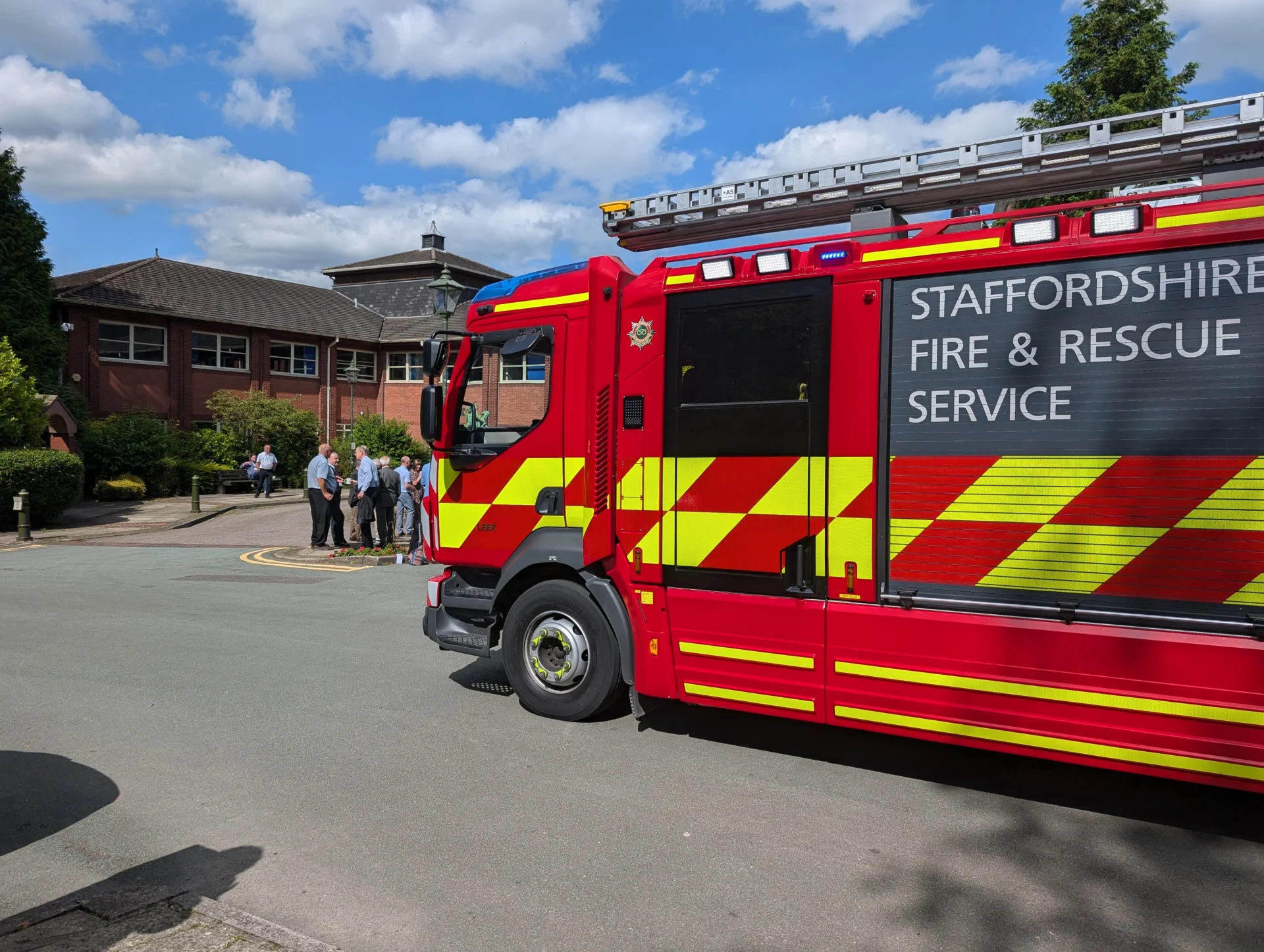

Staffordshire Fire and Rescue Service is recommending that the second fire engine is removed from Stone community fire station.
A report has been prepared for the Fire and Rescue Authority (FRA) following the 12-week Community Safety Options consultation which was carried out in the spring. The Authority has a savings target of £1.7 million for the financial year of 2015/2016. FRA members will discuss the recommendations for Stone at a meeting on 13th July, along with proposals for the rest of the county.
Removing the second appliance from Stone would save £77,000 a year, with changes to stations at Cannock, Burton, Lichfield and Rugeley making a total saving of over £1.1 million. Changes that had been proposed for stations at Stafford, Kidsgrove, Burslem, Tamworth and Burton have been dropped.
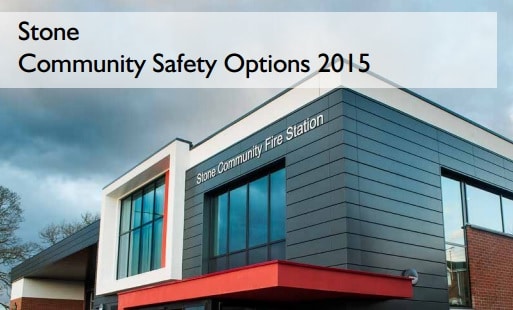
The service published its proposals for the whole county in March and carried out an extensive consultation. Its proposals for Stone’s new community fire station were:
1. Remove the second appliance and maintain crewing at a level which would support the Command Support Vehicle (CSV)
2. Reduce the number of operational staff at Stone and remove the second appliance (this would mean the station’s remaining appliance could not be used at the same time as the command support vehicle)
The service is recommending option 1.
On Friday (3rd July) Stone MP Bill Cash called for the service to keep the second fire engine at Stone. More on that HERE. A local petition gathered over 2,000 signatures opposed to the removal of the second fire engine.

Fire service deputy chief executive Becci Bryant said today: “We received a great deal of feedback from residents, members of staff, partner organisations and stakeholders during the 12-week consultation. We have listened closely to and have carefully considered the views that were put forward and, as a result, the recommendation is not to pursue the New Delivery Model option. One of the reasons for this recommendation is the significant impact that we would experience in our ability to undertake prevention activities. These activities are a cornerstone of our ability to reduce incidents and improve the safety of the residents of Staffordshire. Over the last six years, 135,000 Home Fire Risk Checks have been carried out – 84,000 of which were conducted by operational firefighters.
“We are, however, conscious that savings do need to be made and this, coupled with the fact that the number of incidents has reached an all-time low, would make it remiss of us not to continue to ensure we are operating in the most efficient and effective way. Having looked in detail at the level of demand across the Service, the recommendation for Stone is to maintain the same level of staff in order crew the first appliance and the Command Support Vehicle and remove the second fire engine. This would not lead to job losses but would result in a saving of £77,000 per year.
“As a Service we strongly believe that prevention is far better than cure and the fact that the number of incidents has been decreasing year-on-year supports this ethos. We have made a significant investment into continuing this work through our community fire stations which allow us to have far greater levels of engagement with residents, meaning that we can educate and advise people on fire safety in the home and on the roads.”
The FRA will also be asked to consider introducing part-time workers for operational and non-operational roles across the Service as well as to continue exploring opportunities across the county for operational crews to contribute to a wider range of health, safety and well-being outcomes.
A detailed report outlining all of the recommendations for the county, which would save a total of £1,131,500 annually, can be found at www.staffordshirefire.gov.uk/Documents/fire_and_rescue_authority_13-07-2015.pdf
On removing Stone’s second fire engine, the report states:
The incidents experienced within the Stone area over the last 6 years include 81% classed as low severity incidents, which could be dealt with using a different form of response capability.
The impact of removing the second appliance would result in the Service missing the attendance standard for life risk calls as a first appliance for an additional 0.02% of occasions over a 3 year period. This means that for an additional 2 calls over the 3 years the attendance standard would be missed. The implementation of this option would see no impact on the Service’s ability to meet its attendance standard for the second appliance to life risk incidents.
For the last three years this option would not impact on the Service’s ability to meet the attendance standards for high or medium risk areas, either as a first or second appliance. In respect of attendance to low risk areas the Service would not achieve the attendance standards for a first appliance on an additional 0.03% over a 3 year period, which equates to 2 calls over the 3 years. There would be no impact on the Services ability to meet the attendance standards for a second appliance to low risk areas.
The removal of the second appliance from Stone has a limited impact on the Service’s ability to achieve the attendance standard for the first appliance to a life risk call. There is no impact on the achievement of the attendance standard for the second appliance to a life risk call in addition to the attendance at high or medium risk areas. There is a limited impact on the attendance standards for low risk areas.
The FBU in Staffordshire has hit out at the cuts – more HERE.