We’ve asked the candidates for the Stone constituency for the General Election on 7th May to send us their election pitches, and to answer some specific local questions relating to the town. Click HERE to see all of the candidates’ pitches. Here’s what JOHN COUTOVIDIS, the Independent candidate, has to say…
[divider]
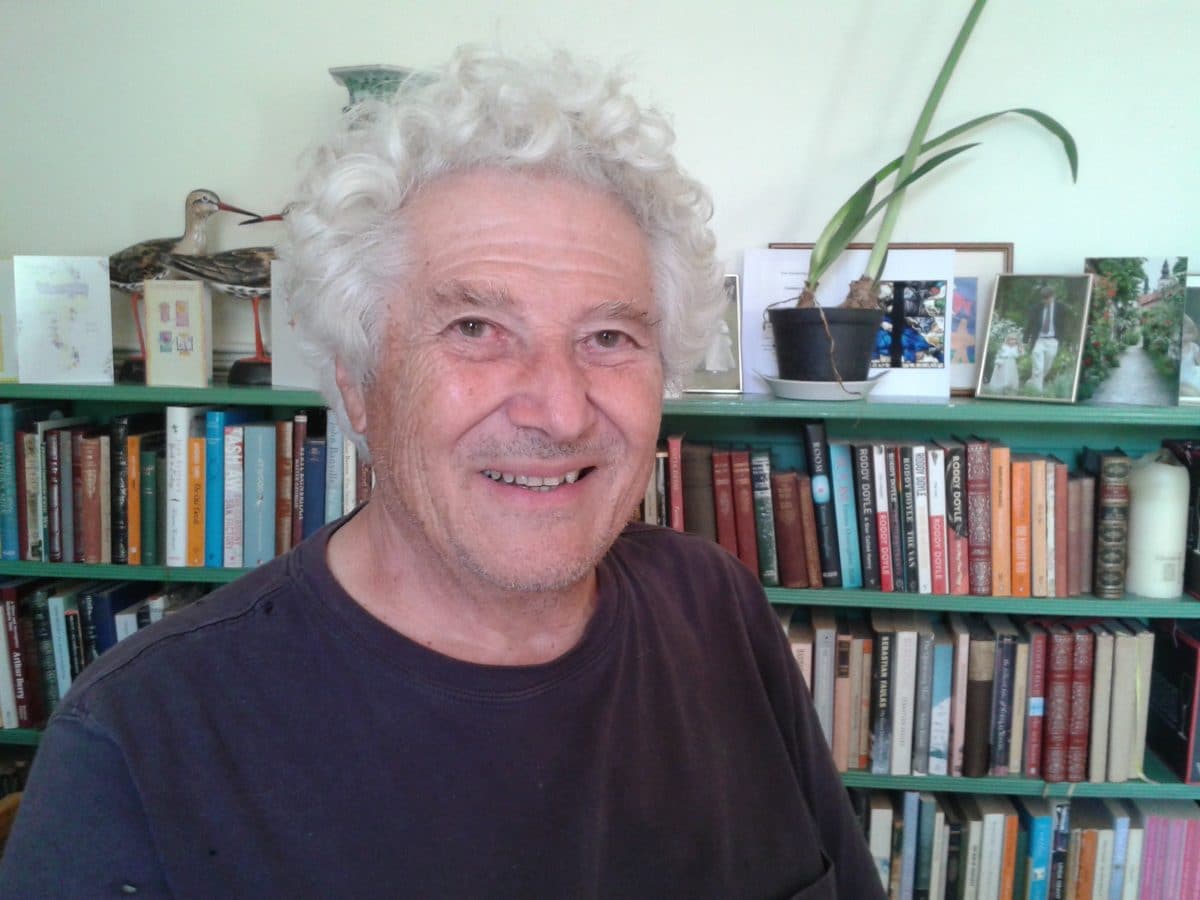
[dropcap]I[/dropcap] was born in 1944 to Greco-Polish parents in the Polish refugee camp in Tegeru, Tanganyika (now Tanzania). My mother escaped Stalin’s Gulag and my father was expelled from Anatolia by Attakurk’s army, both finding themselves in British East Africa, becoming British subjects. Their experiences led to me becoming a historian, fluent in Polish, Greek and up-country Swahili. I came to Britain after a gap year as a tour guide in the Serengeti. I attended Keele University which I chose for its campus life and the finest central heating in the land!
At Keele I met Merrilyn. We married in 1969. She became head of Abbey Hill Special School in Stoke-on-Trent and I joined the college which became Staffordshire Polytechnic where I was head of history, also teaching European and international history at Staffordshire University and Polish History at Keele, where I gained my doctorate by part-time study. I am a published historian and have also written novels, poetry and a play for Kindle readers.
We have one daughter, Sophie, who attended St Dominic’s Priory School in Stone, where she was head girl, and is now a GP in Newham in East London and the mother of Iris and Rosalind, our two glorious grandchildren.
My other interests include supporting Merrilyn’s work in the Church and, when funds allow, learning to fly a Cessna. Our family home is for more than 40 years is The Boat House, Barlaston, in the constituency I wish to represent in Parliament as an Independent.
My manifesto: People Before Projects
1. No to HS2
As your Independent MP I will oppose the hideous spending of ever-rising billions in creating a hideous scar across our constituency. Instead, I will advocate tapping into these allocations for a much needed increase in any future grant from central to local government to give it the ability to meet the rising costs of care for the elderly – a cost which will exhaust local authority budgets in the not too distant future unless monies are redirected from the unnecessary to the essential.
2. Yes to charity at home
It is fundamentally wrong to ring fence £12 billion for overseas aid, much going to corrupt polities, when working families at home are struggling to balance their budget, never mind save for the future. I will advocate free childcare, allowing working mothers a step further up the career and earnings ladder, to be paid out of this source.
3. No to student fees
It is unjust to load our aspiring youth with financial liabilities at a stage in life when they need all the help they can get in securing their future and ours. I propose that universities be compensated by savings made by capping top salaries in the public sector – paid for directly or indirectly by the taxpayer – to a maximum no greater than the Prime Minister’s pay – and by the thorough drafting, accounting and auditing of IT and defence contracts which, loosely compiled and lightly monitored, have been shown to waste billions. And it is such monumental waste and largesse that I wish to address as your MP.

4. Yes to fair trade
The mainstay of our local industry is agriculture and our farmers are often faced with below cost pricing, set by the purchasing conglomerates. A more equitable market for agricultural produce must be established and I will speak up for it in Parliament, where rural affairs have too long been marginalised and expensively misunderstood,
5. Yes to Europe
I believe that Euroscepticism is damaging our interests as a nation. Britain lies across the meridian of many global relationships, yet the dominant one is with Europe, which is more important to us than others in terms of trade, and closest to us in culture. We are European. It is time to set aside battles lost and won and fully engage with building our future where it most certainly belongs, especially for the generation now in school, confident that the British way of doing business will prevail. There is everything to play for in Europe.
Question Time
1.) Stone is a growing town, with thousands of new homes to be built over the next few years. What needs to be done to make sure the local infrastructure can cope?
My role in this contentious local issue would be to weigh opinion against further development beside the legitimate concerns of the planning authorities in providing new housing. New housing should, in my opinion, incline towards starter homes for those on whom our future prosperity depends. However, I have a more radical proposal. I believe that a new village or town should be built near Chebsey to relieve the pressure on the infrastructure in and around Stone. We have to answer the demand and it’s time for a new settlement to be built to do this. Otherwise, it’s all just fiddling.
2.) What needs to be done to improve the town centre economy to attract new businesses and support existing traders?
I would work with MEPs to attract new ventures from Europe, to really boost the town, while also acting as an ambassador for Stone in the US and the Far East. In Parliament I would concern myself with the reduction of red tape which overburdens businesses, especially in the band employing under 50 workers.
3.) What’s the best way to improve leisure facilities in the town?
I’m very passionate about protecting Stone’s green spaces. A town without green spaces is one that slowly decays. I think we need to be very ambitious on what Stone can be as a town and what we can achieve here. We need to lift Stone out of simply being a canal town, as marvellous as that is, and work to transform the town into a real cultural centre. Key to this is to tap into European funding, which is there to do this. Top of my list of priorities would be to bring the old Joule’s building that you see as you walk down the canal in Stone back into use. I really want to see this as an arts and cultural centre. We have to think big.
4.) How can visitors be attracted to the town and our tourism offer extended?
My answer to the previous question is relevant here. Through building the town’s links with the canal, river and green spaces; by building on the town’s burgeoning reputation as a food and drink centre; but by thinking big and having an overall strategy to guide the town’s future development. We must be confident about the future and go for it.
5.) How would you seek to boost inward investment?
I would sing the praises of Stone nationally and internationally, and develop key relationships with MEPs and others to show what a great place Stone is to relocate businesses, to expand or to start a new enterprise. The business parks are a great resource already and house lots of fantastic businesses. I would urge local councils to declare a five-year business tax exemption for to new enterprises committed to creating employment for more than 50 people.
6.) What do you see as the main issues facing Stone in 2015 and what do you see as the best way to address them?
Serving a growing population and increasing Stone’s renown in the region as a cultural centre and destination. We have to build on Stone’s identity as a canal town, its festivals and food and drink speciality by attracting European funding for community and cultural development to support exhibitions, more festivals, touring events, exchanges and more.
Secondly, it is vital to support the rural economy in and around Stone, and across the whole constituency. It is our constituency’s major industry and the nation’s first line of defence. But more farmers are going out of business in this constituency than anywhere else in England. We have to stop this. We have to demand fair market conditions for our farmers, who are being pressed too hard by the purchasing conglomerates. Milk is cheaper than bottled water, for goodness sake.