An infamous 19th century murder that has been marked in the town with a wooden sculpture features in a fascinating new exhibition called ‘Keeping the King’s Peace’, writes Stone Historical Society chairman Philip Leason.
The free exhibition has opened in the Ancient High House at Stafford and runs until 14th July. It was arranged by the new High Sheriff of Staffordshire, Sarah Elsom, and officially opened by the Lord Lieutenant Ian Dudson on 18th April.
The exhibition features information on famous criminal cases in Staffordshire, including William Palmer, the Rugeley Poisoner, and the murder of Christina Collins.
Hangings were carried out in public outside the gaol at Stafford until 1868 and large crowds from the Potteries would pass through Stone in order to see the execution. The brewing journals of Joules brewery record that they brewed extra beer when there was a hanging to quench the thirst of those attending. In the case of William Palmer it is recorded that the pubs in the town stayed open all night.
Christina Collins was travelling by narrowboat from Liverpool to London. It is important to remember that some passengers were carried by canal boats as it was cheaper than travelling by coach. She passed through Stone on the journey and raised concerns about her safety to the lock keeper at Aston. Her body was found on 17th June 1839 at Rugeley.
Three of the four bargemen were charged with her murder. All three were sentenced to be hanged so as a souvenir for those attending the execution a broadsheet was printed beforehand showing the three dangling from the portable scaffolding outside Stafford Gaol. However one of the men was reprieved at the last minute and was sentenced to be transported to Australia instead.
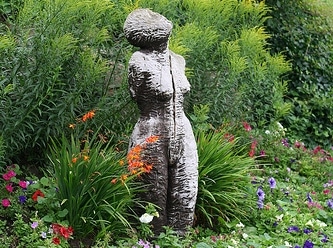
Today, to commemorate Christina passing through Stone, there is a wooden sculpture named after her by the bridge below boat yard lock. The story of her murder also inspired an Inspector Morse mystery by Colin Dexter entitled “The Wench is Dead”.
The exhibition also includes features on the role of the High Sheiff, the Judiciary (including the black cap which was worn to pronounce the death sentence); the Magistracy; the Association for the Prosecution of Felons (including the badge of office worn by the President of the Stone Association) the prison (including a bottle of brandy, a tot of which was given to the condemned prisoner before he went to the scaffold and the Communion set used to give them the last sacrament), the Staffordshire Yeomanry and the Police force.