

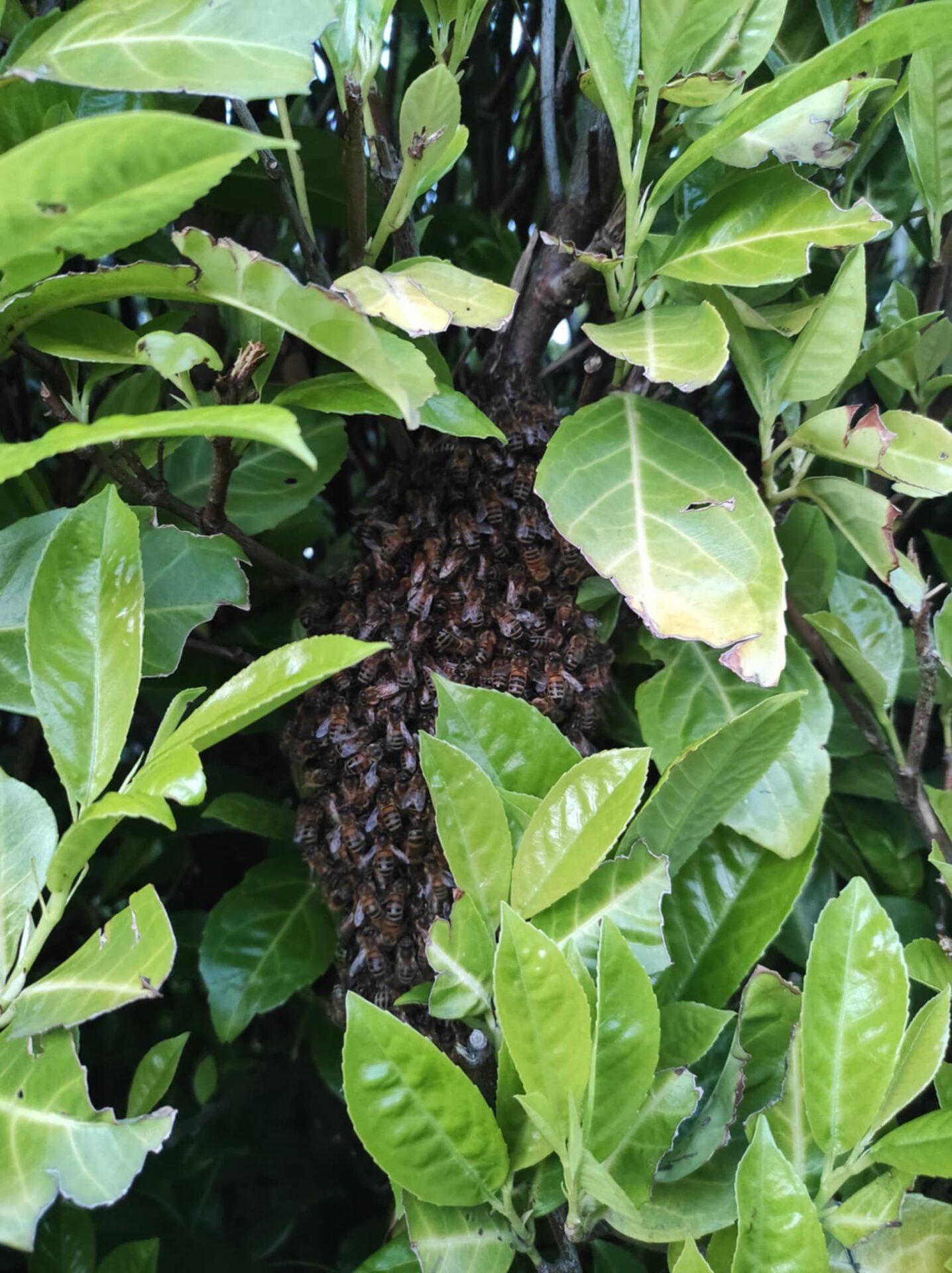
A local beekeeper is urging residents not to panic if they see a swarm of bees, after a colony in a housing estate in Stone was sprayed with chemicals by a concerned resident.
Gill Knight, who keeps bees in Stone and sells her honey locally, was alerted to a small swarm earlier this week. But before she could arrive, the bees had already been sprayed with what she suspects was fly spray or wasp killer.
“Swarming bees rarely sting,” she explained. “They’re full of honey and just looking for a new home. This was a healthy, peaceful colony that could have been safely collected.”
Swarming is a natural part of a honey bee colony’s lifecycle. When a hive becomes overcrowded, the queen will leave with part of the colony to find a new nest site. During this time, bees cluster together around their queen, often resting temporarily on branches, hedges or garden furniture. Though it can look dramatic, it’s usually harmless.
Sadly, in this case, the swarm had already been dispersed by the time Gill arrived.
“They can’t scent the queen now. Many are dead, and more are dying. Without the cluster to keep them warm, those left won’t survive the night. It’s such a tragic loss of pollinators.”
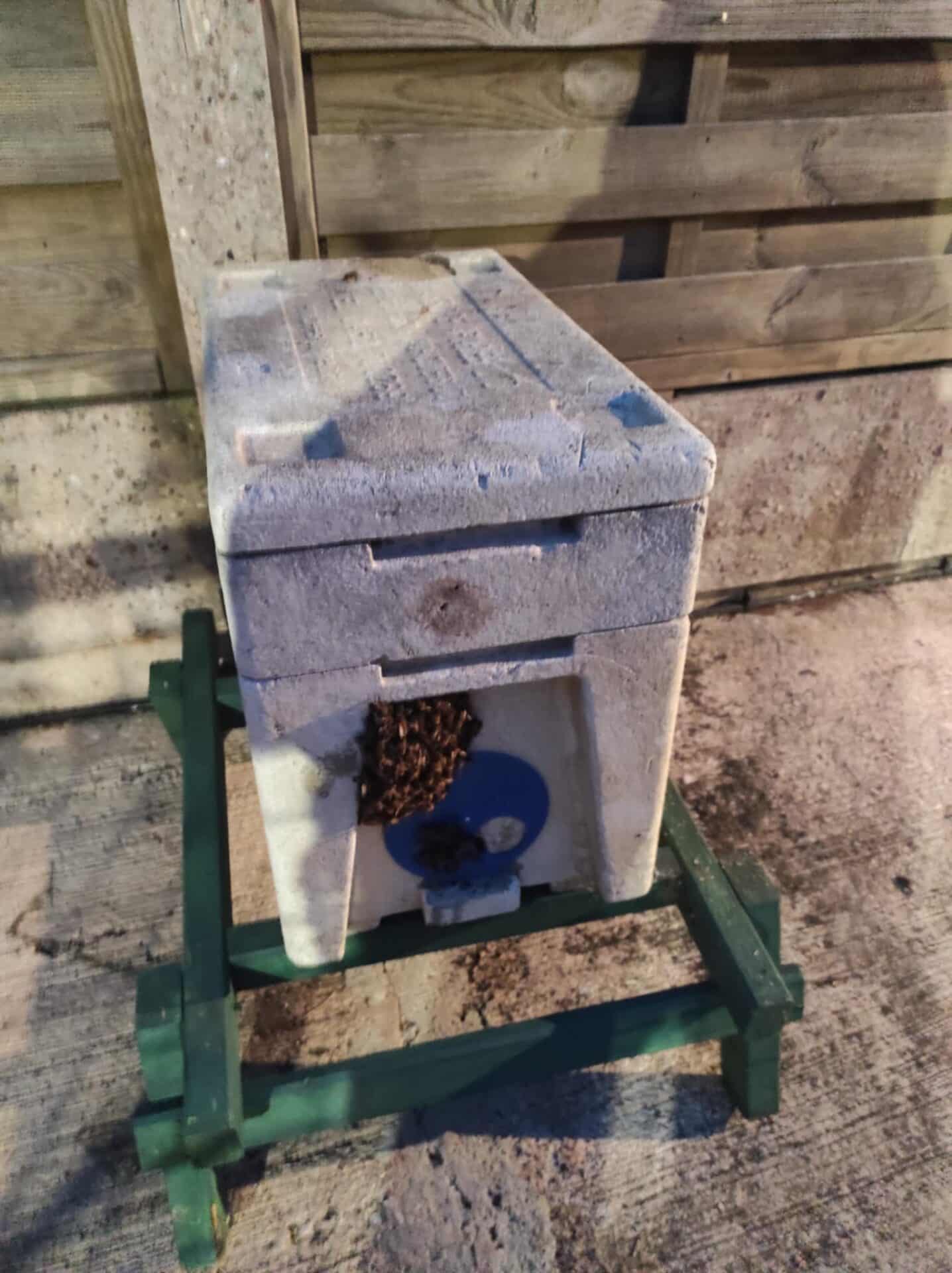
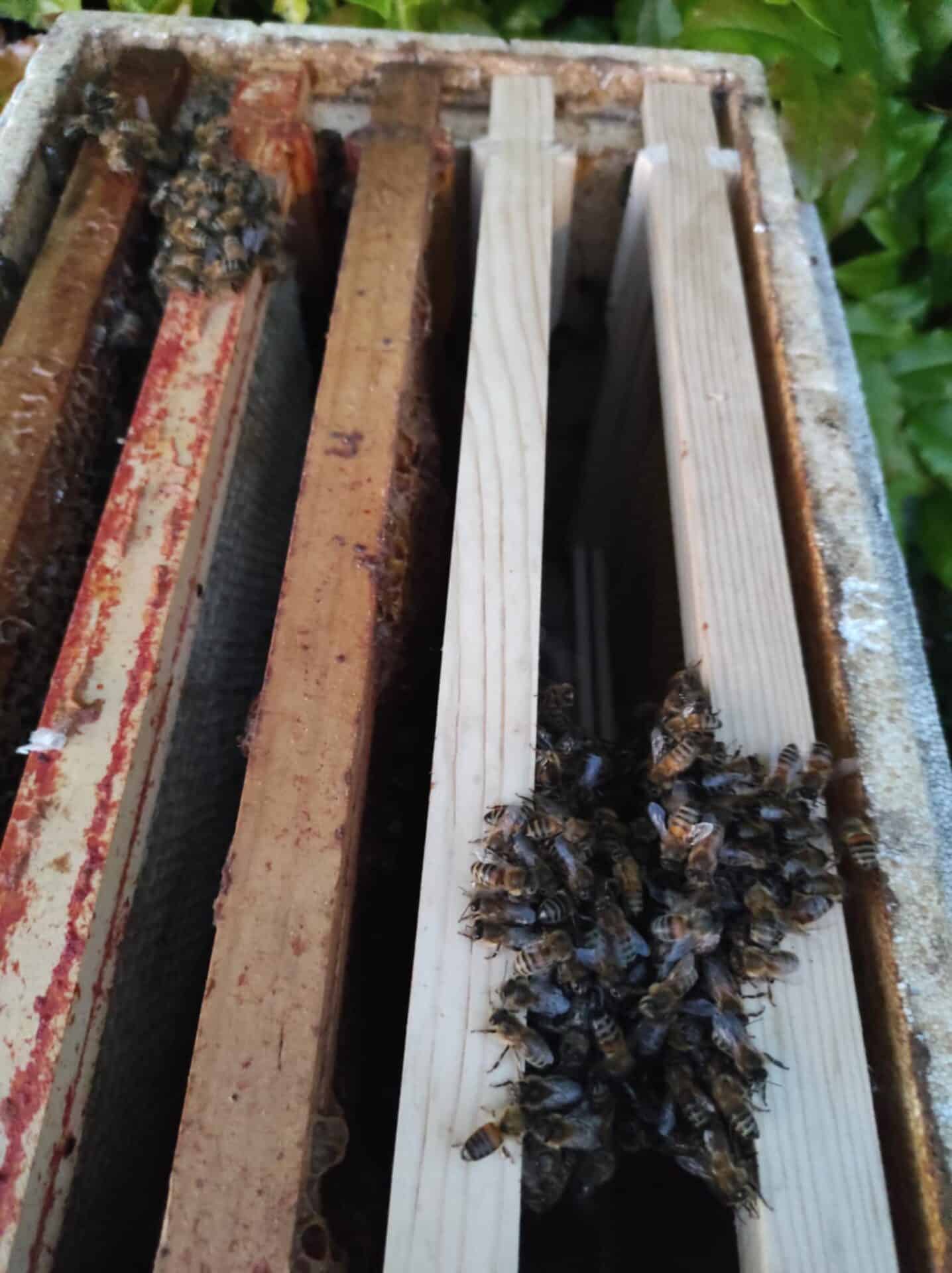
Gill tried to gather surviving bees using a small nucleus box and scented wax comb to attract them. Over several hours, she monitored the stragglers and was eventually able to collect a cluster that began fanning their wings, a hopeful sign that the queen may have been with them.

“Had they been left alone to cluster, it would have been a simple recovery,” she said. “Please, please never use sprays on a swarm. Contact a trained collector instead.”
Each year, thousands of trained volunteer beekeepers across the UK are ready to collect and safely rehome swarms for free. The British Beekeepers Association (BBKA) is currently running its annual Swarm Savers initiative to raise awareness. In Staffordshire, local collectors can also be found through the Staffordshire Beekeepers Association or nearby professional bee farmers.
BBKA Chair Diane Drinkwater said: “There’s something truly magical about witnessing a honey bee swarm. It’s how a colony reproduces. But without help, many never make it.”
According to the BBKA, up to 80% of swarms won’t survive without human intervention. Their website offers resources and a searchable map to find a local swarm collector: https://www.bbka.org.uk/find-a-local-swarm-collector.
Gill added: “This year’s unseasonal heat means swarming started earlier than usual. I’m always happy to answer questions, but I’m not a collector and don’t have the equipment or capacity.”
What to do if you see a swarm of bees:
- Stay calm. Swarming bees are usually docile.
- Keep children and pets away, but do not disturb the swarm.
- Take a clear photo if possible.
- Use the BBKA swarm map to find your local swarm collector.
- You can also contact the Staffordshire Beekeepers Association or a local bee farmer.
By calling in a trained beekeeper, you’ll be protecting pollinators, helping the environment, and possibly giving a new colony a safe start.


Related Posts:


3 comments
Cheryl
This is very informative and lovely to hear how much Gill is doing to protect nature.
Robert
Very helpful article and thanks to Gill for her efforts to help the bee population.
Helen
Thanks for sharing this info, great to know.