

One in 500 people have Parkinson’s – that’s 127,000 in the UK, over 30 in Stone. One of them is John Mills and we met him during Parkinson’s Awareness Week (18th to 24th April) to find out more about the condition…
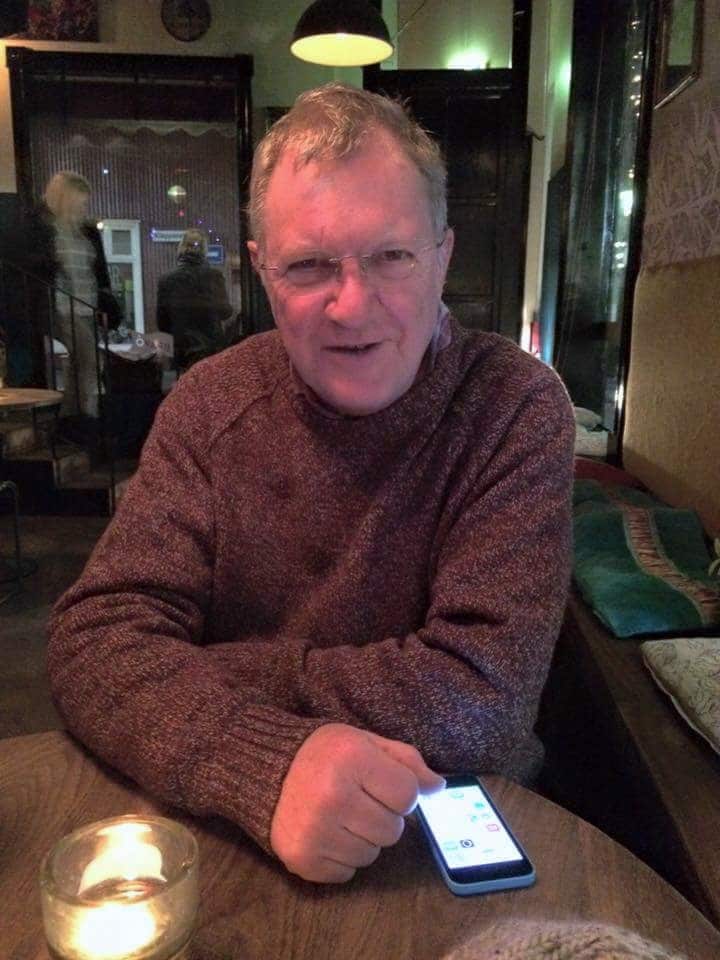
[dropcap]P[/dropcap]icture the scene. You’re in a pub, you’ve had a couple of drinks, but you’re nowhere near drunk. Only thing is, you can’t seem to get off that high stool you’re sitting on. It takes a huge effort and, when you finally manage it, you stagger, almost falling. People are staring. Some are laughing. They think you’re legless. Now you can’t get your coat on. You’re struggling, and the laughter’s getting louder. Only you’re not drunk; you have Parkinson’s.
This happened to John Mills a couple of years ago.
This week is Parkinson’s Awareness Week, the annual awareness-raising campaign by Parkinson’s UK.
Parkinson’s is a progressive neurological condition. In a nutshell, people with Parkinson’s don’t have enough of a chemical called dopamine because some nerve cells in their brain have died. It’s not known why this happens, and there’s currently no cure. Most people who get Parkinson’s are over 50 – but younger people can get it too.
John, who turned 64 this week and was an English teacher for over 30 years, realised something was wrong about five years ago.
“I noticed the shaking,” he says, “but at first I just put it down to stress. Initially, I could make it go away by forcing myself to relax. It would be back in seconds, but I had some control over it. Eventually, though, it became uncontrollable.
“My GP asked me to do a few things, like walking backwards – I found myself thundering into the wall. He also asked me to write something, and my handwriting was infinitely smaller than it used to be. Bizarrely, one of the things that Parkinson’s does is shrink your handwriting.”
After being referred to a specialist and having a brain scan, John was diagnosed.
He admits he didn’t know much about the condition – “effectively, I knew nothing” – and thought it was going to be life-threatening. It isn’t, but symptoms do get worse over time.
[dropcap]P[/dropcap]arkinson’s is a unique condition in many ways. The main symptoms are tremor, rigidity and slowness of movement – but everyone’s are different.
“There are two things I hate about Parkinson’s,” John says. “One is the constant tremor, because it never lets you forget. With other conditions I’ve had, there are times when you forget all about it for 10 minutes. Parkinson’s? Never. If I move my left arm, it stops. As soon as I rest, it starts again.”
Sometimes, he says, it can feel like “the elephant in the room”.
“Another bloody irritating thing is that when I walk, my left arm just tends to hang down, lifeless. It makes me feel like I’m walking lopsidedly. What I find really upsetting is my handwriting. It was gradually getting smaller, so I didn’t notice how small it was getting until the GP pointed it out. I hate that I have to concentrate and think about writing my own name.”
This is particularly hard for John as he’s a writer, and the computer just isn’t the same as, he puts it, “the physical interaction between limb, pen and paper”.
“I’m not a good enough typist,” he says, “and anyway, the left hand is a little bit inaccurate. And I couldn’t use voice-activated software. I’d be like ****, I didn’t mean that, oh ********. It would take me ages to delete all the swear words!”
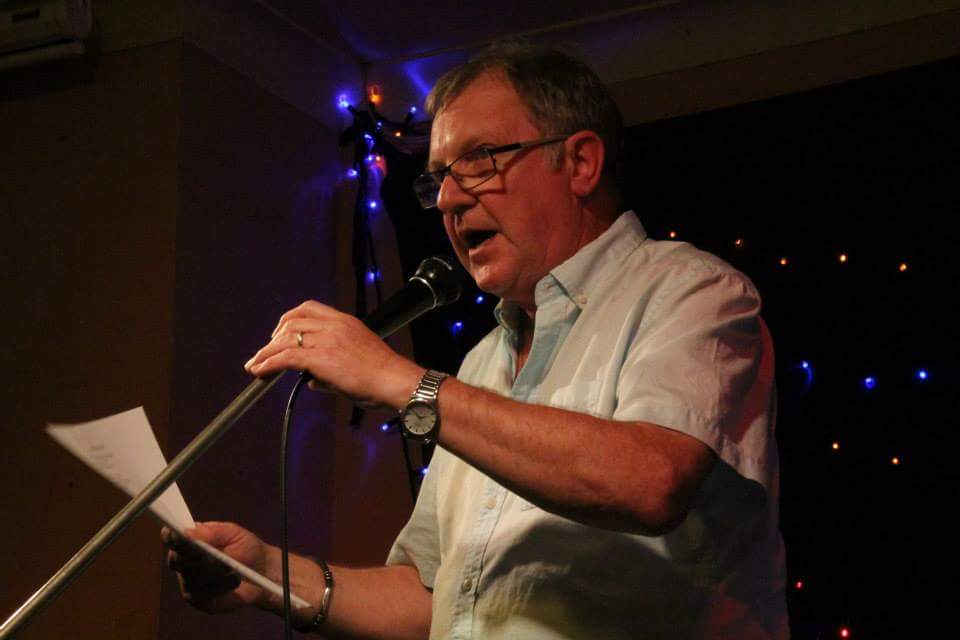
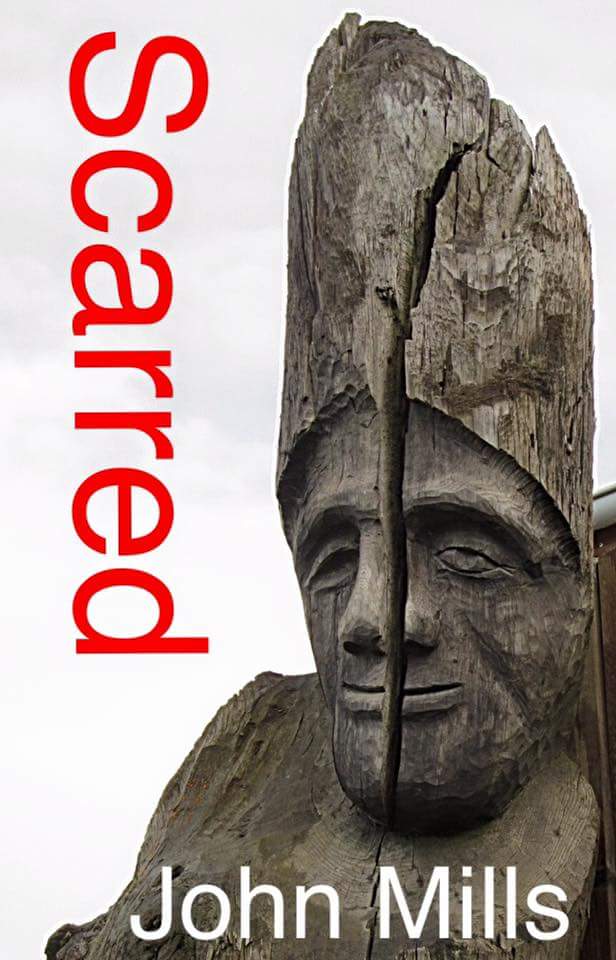
He’s written poetry for decades and has just had a collection published. And, after taking some time to turn his writing to Parkinson’s, he’s written a poem about it that he’ll be entering into competitions this year. It’s a chilling read, where the condition is portrayed as a stalker and a cold puppeteer, controlling John with a snide indifference.
[dropcap]O[/dropcap]ther symptoms of John’s Parkinson’s mean that he can’t turn over in bed. If he wants to, he has to get out of bed, walk to the other side and climb back in again. Dressing can be a difficulty, also, and he says he has no sense of balance. “I pogo round the shower when I have to wash my feet.”
Another are ‘dream enactments’. John regularly acts out his dreams. One he remembers is dreaming about a spectacular Wayne Rooney overhead kick goal – he ended up in A&E after falling out of bed and cracking his jaw on the bedside table. “The bedroom’s like a soft play area now,” he says, “to protect me.”
All of John’s symptoms are physical and he considers himself fortunate that his intellectual capabilities haven’t been affected. But it’s a fear.
“I’m frightened of losing my mind,” he says. “There’s a 25% chance of getting dementia if you have Parkinson’s. But looking at it another way, there’s a 75% chance I won’t.”
Talking of percentages, almost 40% of people with Parkinson’s say they feel the need to hide their symptoms or lie about having the condition. John isn’t one of them, but that incident in the pub a couple of years ago changed the way he handles his condition in public.
“Something I learned from it is that I never wanted it to happen again. Now I pick the nearest person to me if I need help to put my coat on, for example. And I made that rule, otherwise I’d scan round the pub thinking, ‘Ooh, I don’t like the look of him’, or ‘She’s only 18 and she’s with her boyfriend, I’d better not ask them’. So I just go to the nearest person to me and say, ‘Excuse me, I’ve got Parkinson’s. I’d like to put my coat on but I know I can’t’.”
“Psychologically, I live for the moment. I know the future and it’s bleak. So I want to enjoy life I don’t want to look into the future too much. It’s very dangerous to wallow in the past and what has been, or to wallow in the future and think what might be. This might include freezing on a regular basis, inability to eat, having to massage your throat so you can get food down, losing the ability to speak and things like that. I try not to waste time.”
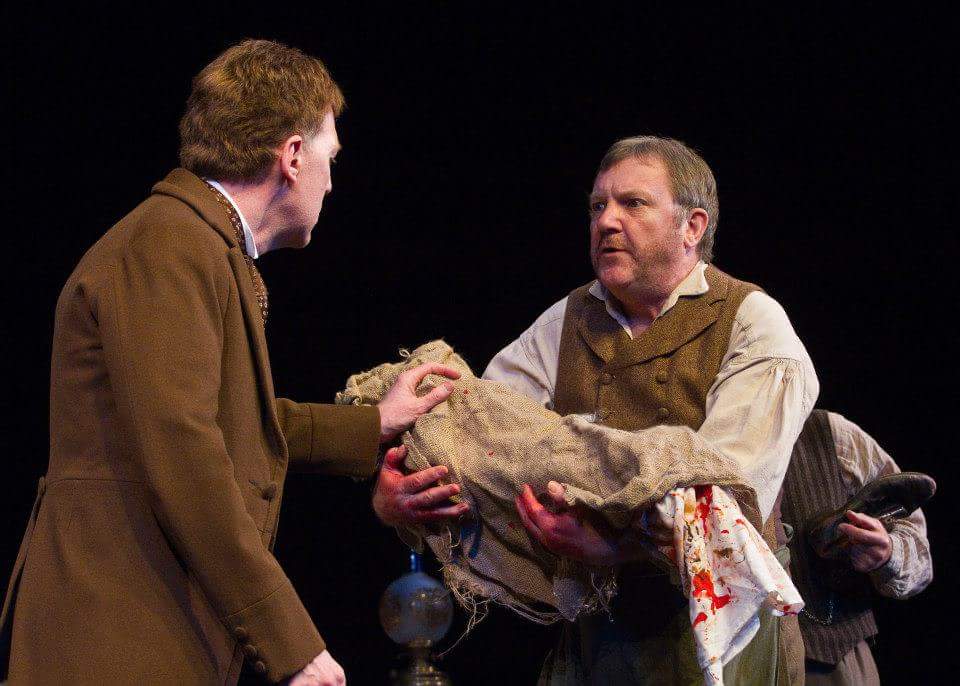
[dropcap]J[/dropcap]ohn’s passions include acting – “I made my stage debut at minus three months – my mother was six months’ pregnant with me when she was on stage” – and poetry. He also plays the guitar, which helps to control his tremors.
He is also taking part in research with Keele University – “It won’t benefit me in any shape or form but it might benefit someone else.” Medication keeps John’s symptoms under control, but more research and funding is required. Because everyone’s symptoms are unique, everyone’s medication has to be unique too.
As a poet, John has an interest in the words we use to describe and explain things.
[dropcap]”A[/dropcap] lot of people say ‘battle with Parkinson’s’, or cancer, or whatever. I hate that term,” John says. “This isn’t a battle. It’s a way of coming to terms with it. Sometimes people say I’m ‘brave’. I’m not brave at all. Bravery’s doing a job where people are shooting at you, or going into a burning building to rescue people.”
[box type=”info” ]There’s lots more information about Parkinson’s HERE. You can make a £5 donation to Parkinson’s UK by texting PARKINSONS to 70500[/box]





1 comment
Ava Betz
Awesome interview!