Two phrases often appear in housing debates, greenfield and Green Belt.
They sound similar, and they are sometimes used as if they mean the same thing. But in planning terms, they are different.
That difference matters when people are trying to understand whether land around Stone, or anywhere else in Stafford Borough, is protected from development.
A site can be greenfield without being Green Belt. A site can also be in the Green Belt without being a perfect open field. Some Green Belt land may already have buildings, hardstanding or other previous development on it.
Understanding the difference helps residents ask better questions when planning applications or Local Plan proposals come forward.
What is greenfield land?
Greenfield land usually means land that has not previously been developed.
In everyday terms, this might be farmland, open fields, grassland, countryside or undeveloped land on the edge of a town or village.
Greenfield land is not automatically protected from development. It may be valued locally, it may have landscape, drainage, wildlife, heritage or farming importance, and it may sit outside an existing settlement boundary. But being greenfield does not, on its own, mean housing cannot be proposed there.
That is why many housing debates around towns focus on greenfield sites. Developers may see them as easier to build on than complicated brownfield sites, while residents may see them as the countryside edge of their community.
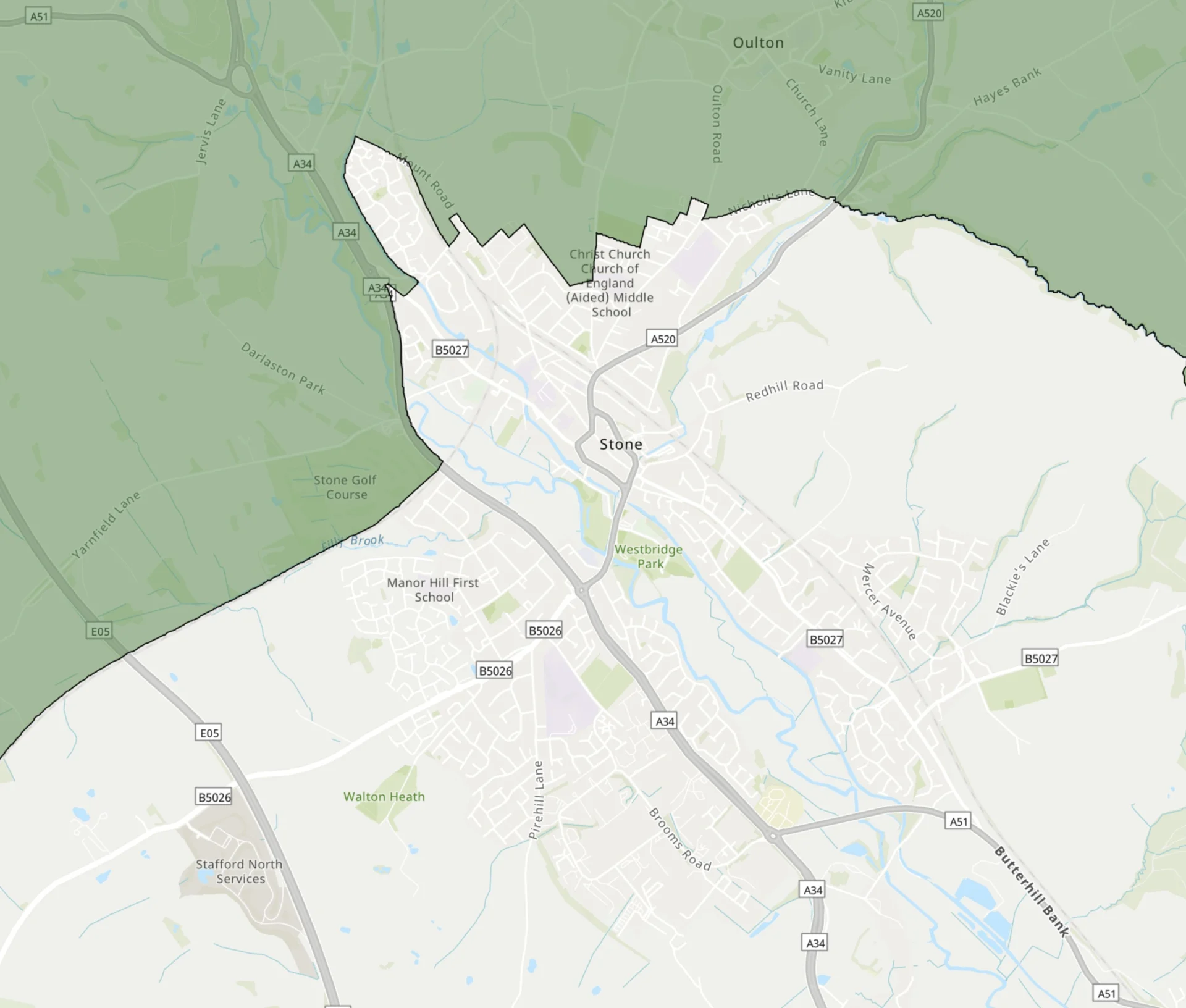
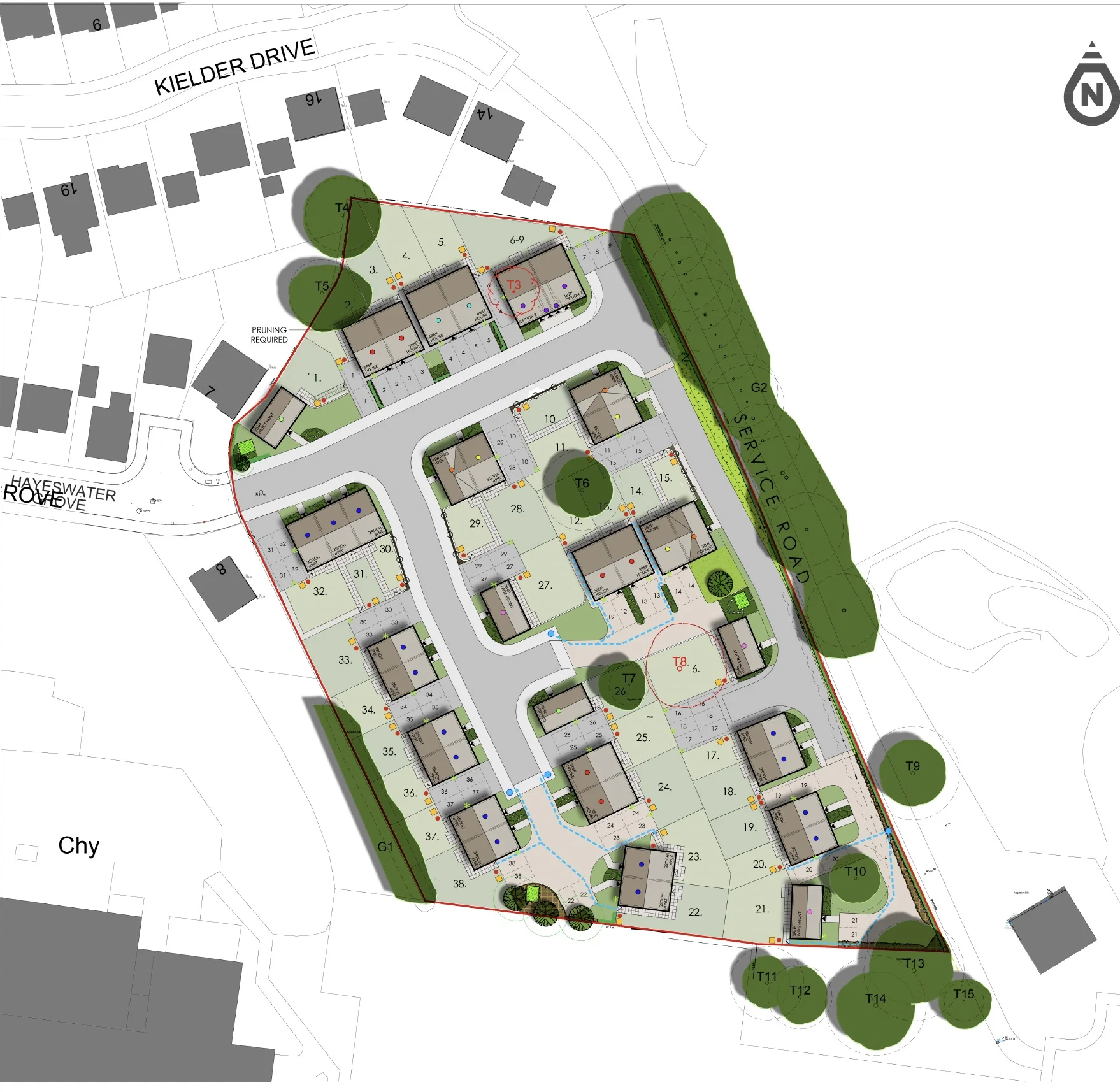
As you can see from the map below, the recent proposal for the development of a Lidl store is on a greenfield site – as their literature states.
What is Green Belt?
Green Belt is a formal planning designation.
It is not simply any green land, and it is not a general label for countryside. Green Belt land has to be designated through the planning system, usually through a Local Plan.
Green Belt policy is intended to prevent urban sprawl, stop neighbouring towns from merging, protect the countryside from encroachment, preserve the setting of historic towns, and encourage development to return to urban land.
Because it is a formal designation, Green Belt normally carries stronger planning protection than ordinary greenfield land.
That does not mean development in the Green Belt is impossible. But it does mean proposals face a different and usually tougher planning test.
Can land be both greenfield and Green Belt?
Yes.
A field on the edge of a town could be greenfield because it has not been developed before. If it also sits within a designated Green Belt area, it is both greenfield and Green Belt.
But the two terms are still not interchangeable.
Greenfield describes the previous use or condition of the land.
Green Belt describes its planning designation.
That is the key distinction.
What the map around Stone shows
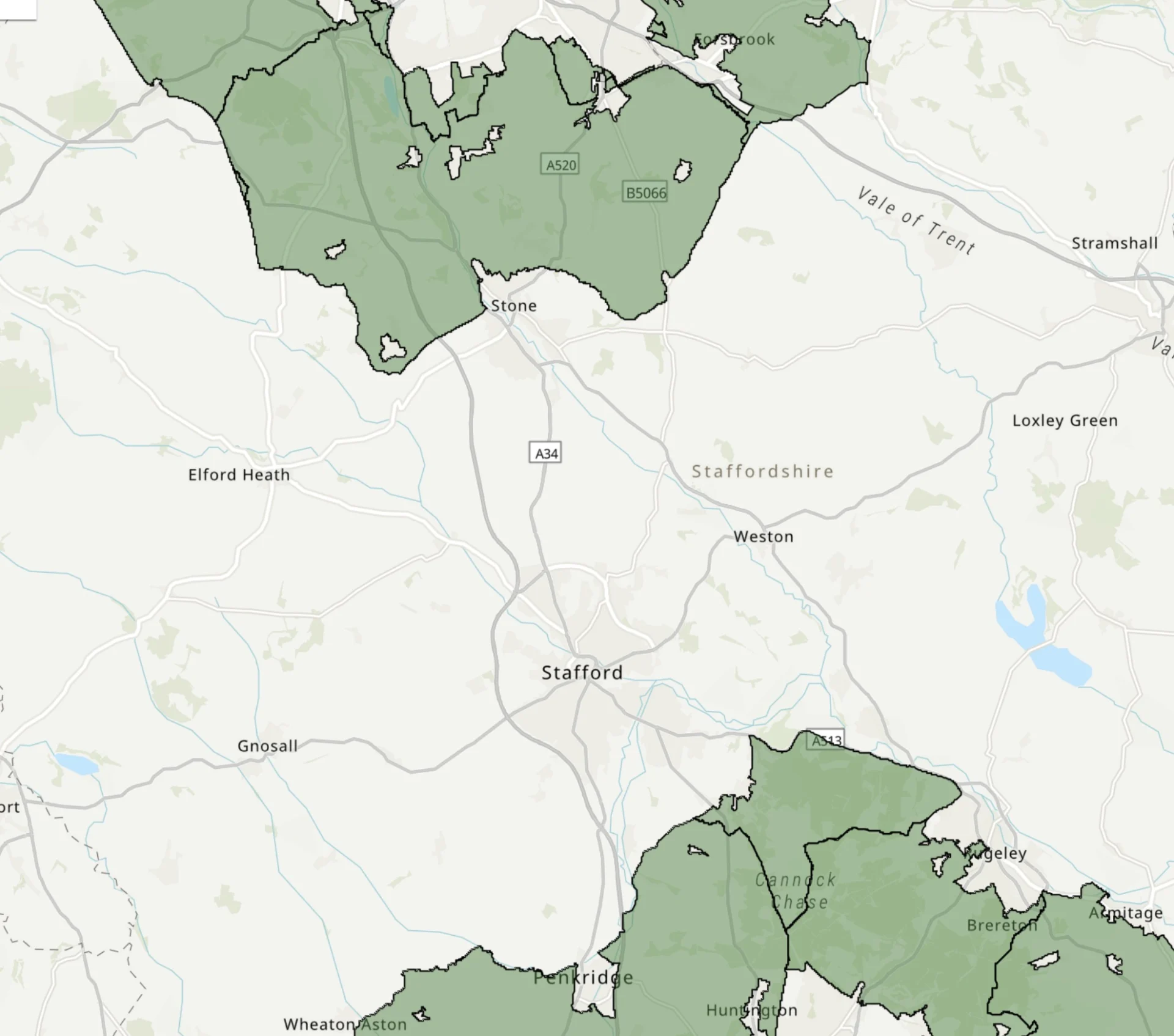
A map of the Green Belt around Stone shows why the distinction matters locally.
The shaded Green Belt area appears to sit mainly to the north and west of Stone, while the town itself and large areas to the east and south east are outside the shaded Green Belt area.
That means some land around Stone may look open, rural or green, but may not be formally designated as Green Belt.
It also means two fields can look very similar on the ground but have different planning status.
For planning purposes, the key question is not simply whether land looks green. It is whether it is greenfield, brownfield, Green Belt, inside or outside a settlement boundary, or affected by other planning constraints such as flooding, landscape, heritage, ecology or highway access.
Readers can also explore England’s Green Belt through CPRE’s interactive online map, which allows users to search by location or postcode and view Green Belt land alongside other map layers.
What about brownfield land?
Brownfield land is land that has previously been developed. It might include former industrial land, old buildings, redundant yards, unused commercial sites or other previously built on land.
Planning policy often encourages councils to make effective use of brownfield land before releasing undeveloped sites, but brownfield is not always simple.
Some brownfield sites may be contaminated, expensive to clear, poorly located, still in use, unsuitable for homes, affected by access problems, or owned by someone who does not want to bring them forward.
That does not mean brownfield land should be ignored. It means Local Plans need to explain clearly what brownfield options exist, whether they are suitable, and why greenfield land is being considered if alternatives are available.
What is grey belt?
Grey belt is a newer term in national planning policy.
It refers to certain land within the Green Belt, including previously developed land, or other Green Belt land that does not strongly contribute to some of the main Green Belt purposes.
The term does not mean all Green Belt land is suddenly available for housing. It also does not mean councils can ignore infrastructure, landscape, flooding, transport, heritage, ecology or local character.
But it does mean some parts of the Green Belt may be treated differently from the most sensitive Green Belt land when councils are planning for housing.
Why this matters locally
When residents hear that a housing site is greenfield, it means the land has not previously been developed. It does not automatically mean it is Green Belt.
When residents hear that a site is Green Belt, it means it has a formal planning designation. It may be open countryside, but it could also include some previously developed land.
For Stone and the wider Stafford Borough, the practical questions are usually these:
- Is the site greenfield, brownfield or previously developed?
- Is it inside or outside a settlement boundary?
- Is it designated Green Belt?
- Does it have landscape, heritage, wildlife, flood or drainage constraints?
- Would development be well connected to roads, schools, public transport, shops and services?
- Could brownfield or less sensitive sites meet the same need instead?
- What infrastructure would be needed before homes are occupied?
Those questions are more useful than simply asking whether a site is “green”.
The simple way to remember it
Greenfield is about what the land is like or whether it has been developed before.
Green Belt is about whether the land has a specific planning protection.
A greenfield site is not automatically Green Belt.
Green Belt land is not always untouched countryside.
For residents responding to planning applications, the distinction matters because each term carries different weight in the planning process.
The clearest question to ask is not just whether land is green. It is what status the land has, why it is being considered, and whether there are better places for the homes, roads and infrastructure the area is being asked to accommodate.





2 comments
Nick Tucker
It’s important that people understand the difference, particularly when commenting/objecting on planning issues.
An objection based on green belt when it’s a green field site (such as the proposed Lidl) could be disregarded as factually incorrect and therefore disregarded altogether.
Susan Robinson
Thank you for explaining