


March is MSA Awareness Month. ‘Multiple System Atrophy’ is a devastating rare brain disease that affects around 3,000 people in the UK, including Aimee Nicholls’ nan Alison. Aimee, from Stone, explains more about MSA and her nan’s story in this guest post…
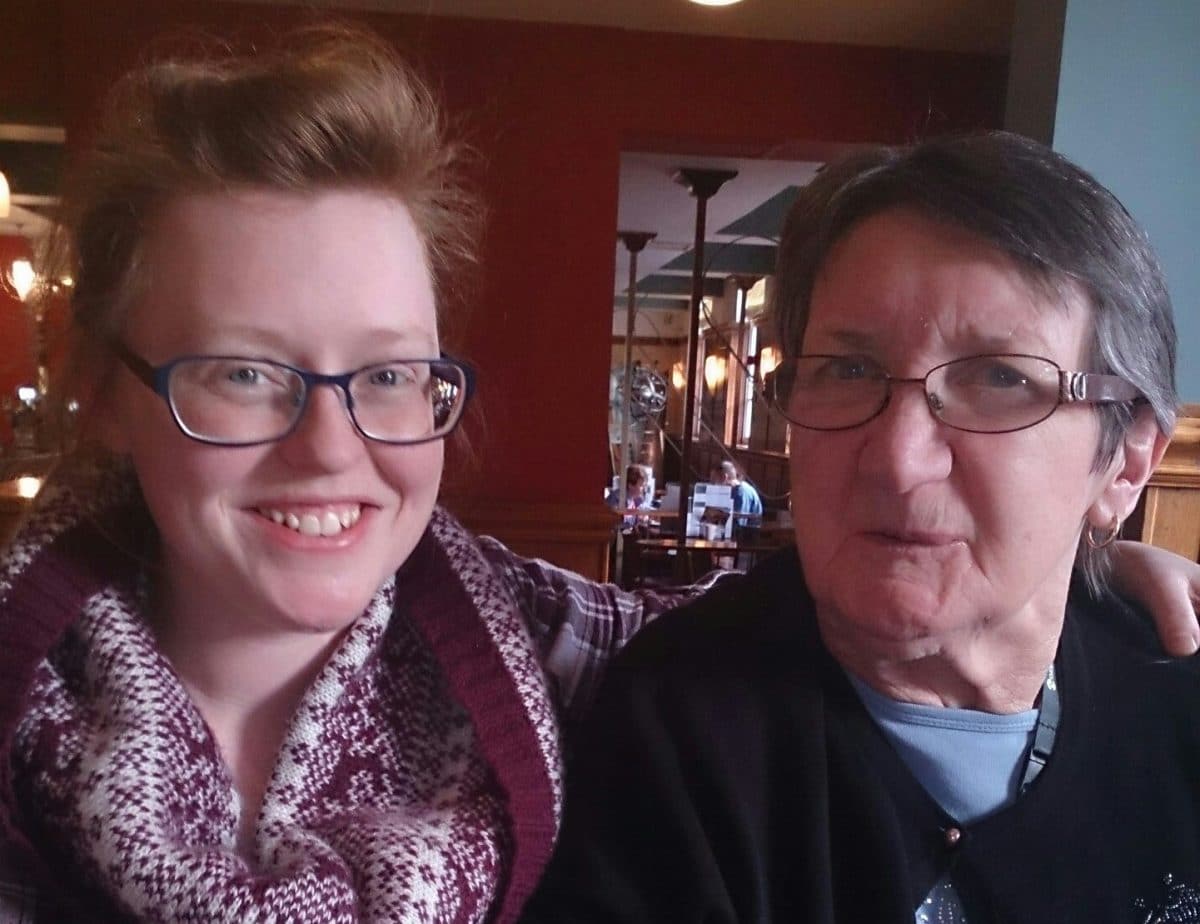
Did you know that March 2014 is MSA Awareness Month? It’s something I’m sure most readers are unfamiliar with, but it’s a devastating rare brain disease that affects around 3,000 people in the UK. MSA stands for Multiple System Atrophy, and for people who suffer from this disease, and those who love and care for them, the lack of awareness can leave countless people isolated and struggling to get the help they need.
MSA causes nerve cells in the brain to shrink, leading to problems with movement, speech, balance and automatic body functions. The disease can affect anyone and there is no known cause or cure, and usually strikes people in their late 50’s.
I know of this disease because my Nan suffers from it. She has endured MSA for 4 years. At first she was misdiagnosed with Parkinson’s Disease, a common challenge for those with MSA, and she has only just been given the formal MSA diagnosis we all needed.

Before all this, towards the end of 2010, my Nan was still working full time aged 71, and she had always been a very active and independent woman, never relying on anyone for help. Then, gradually, her ability to walk began to deteriorate, seemingly without reason, to the point where she required a walking stick. Having been so confident and self-sufficient for so long, my Nan found this difficult to deal with, as her body became less responsive to her continuously active mind. The walking stick was a symbol of her slowly progressing illness, and she was uncomfortable having to display this sign of infirmity without knowing why, or what was happening.
From there this mysterious aliment began to envelop her whole body, and over the past few months she lost full mobility in her arms, legs, and even over the muscles that control swallowing. Most devastating of all, her mind was left unchanged. She still thought and spoke with the strong feel will she had valued all her life, but her active mind was involuntarily becoming trapped in an inactive body.
For a while I was one of her primary carers, a responsibility that I undertook with the help and support of my parents. Right from the beginning things weren’t easy, as we all struggled to cope with this rapidly changing situation – most of all my Nan. She couldn’t really accept the condition she found herself in, transitioning from a very strong minded and independent individual to requiring the care of her granddaughter and immediate family.
Even a diagnosis of Parkinson’s Disease made it no easier for Nan to adjust, mainly because she was certain it wasn’t the right diagnosis. Parkinson’s didn’t quite fit all of Nan’s symptoms, and Nan felt all the medication she was given had little effect, no matter how much the dose went up or down. Only now we do know this is because MSA patients generally show minimal if any response to the medication offered to those with Parkinson’s Disease.
The reason for confusion is sad but simple: MSA often presents with some of the same symptoms as Parkinson’s Disease, and the scarcity of MSA often leads to a misdiagnosis. Nan’s Parkinson’s Nurse thought it could be MSA, but we all hoped it wasn’t.

Nan even went to see a private doctor to get a different perspective on the cause of her symptoms, seeking an understanding of her condition in a way that the diagnosis of Parkinson’s Disease failed to achieve. He too mentioned that it could have been MSA, but was hesitant to give a definitive diagnosis.
Her condition seemed to deteriorate quite quickly, and in November 2012 Nan finally accepted she needed more care that we as a family could provide for her at home. This was a difficult decision for my Nan, as it meant exchanging her own home where she felt safe and cared for a life in a nursing home. This would be a difficult prospect for anyone to face.
She had been before for respite, but that was different. After a couple of weeks of respite she knew she would be back home, exactly where she wanted to be. But having to come to terms with a nursing home being your ‘home’ indefinitely must have been hard. I know it would be for me.
A year later in November 2013 my Nan was admitted to hospital with severe dehydration and weight loss due to a deterioration in her ability to swallow. After 4 weeks in hospital a PEG was fitted, a nutritional feed passed directly into the stomach so that she didn’t need to take food by mouth. This is when she finally got a formal diagnosis of MSA, due to pressure from us as a family and an information pack from the Multiple System Atrophy Trust that offered an explanation of all her symptoms.
In January 2014 she was back at the nursing home for just 2 weeks before again being readmitted to hospital with aspiration pneumonia. Today she is still in hospital, and although she has responded well to IV antibiotics, some days are better than others – both physically and emotionally.
I believe that if my Nan had got a diagnosis of MSA in the beginning she would have had a better attitude towards her illness. Her frustration in the lack of knowledge surrounding her condition, coupled with the gradual loss of her active life and independence, led to a mixture of anger and sadness. I can understand how she must feel, slowly being unable to do any of the things not long ago she could do for herself.
I strongly believe that a greater awareness of MSA will help all of those touched by its devastating consequences better deal with its physiological and psychological impact, especially when misdiagnosis is so common.
The plain language information from the MSA Trust was, and continues to be, vital to our ongoing battle with this debilitating condition. Owing to their time and resources, I feel that my Nan is better equipped to face MSA head on. There may not be a cure, but better knowledge will lead to a better quality of life.
By reading this you are helping me to defeat the misunderstanding that still plagues MSA diagnoses – so thank you.
Click HERE for lots more information from the MSA Trust.



Related Posts:





1 comment
franca tranza
Dear Aimee – everyone at the Trust was very touched by your article. We are planning to develop a resource for young carers and I wonder if you would like to be involved. Please email me at franca.tranza@msatrust.org.uk.
Thank you
Franca