


As part of our coverage of the upcoming Staffordshire County Council elections, A Little Bit of Stone invited every candidate standing in the Stone area to complete a standard questionnaire. The questions were shaped by feedback gathered through our recent Stone Matters survey, where local residents told us which issues matter most to them.
We asked candidates to focus their answers on the responsibilities of Staffordshire County Council – highways, education, social care, transport, public health and related services. Their responses appear below unedited, exactly as supplied.

Name
Jordan Turnock
Party
Reform UK
Division
Stone Urban
Q1: Tell us a bit about yourself. Who are you, and why have you decided to stand for election in the Staffordshire County Council elections?
My name is Jordan Turnock. I’m 28. I grew up in Stone, attending Saint Michael’s First School, Christchurch Middle School, and Alleynes High School, before moving on to the JCB Academy and university, where I achieved my degree specialising in manufacturing and project management. In my short engineering career, I have been entrusted with and have delivered multimillion-pound large-scale civil projects, many of which have been based in London.
Q2: Do you live in the Division?
No
Q3: If not, why have you chosen to stand here?
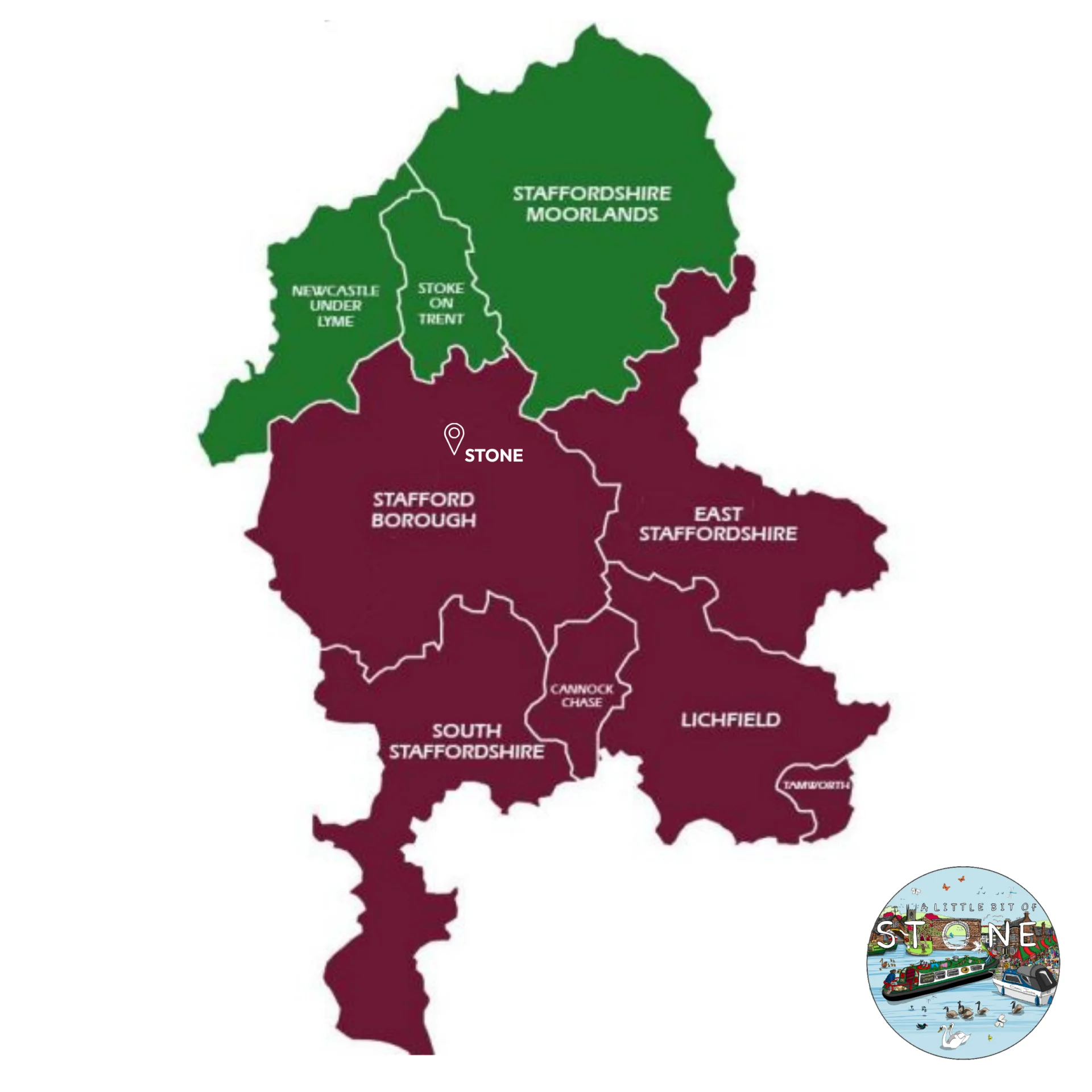
I am just on the boundary. Due to the boundary classifications, I fall just outside of Stone Urban and would have been in Stone Rural until the changes this year. I consider myself a Stone resident, having grown up and attended school at Saint Michael’s, Christchurch, and Alleynes. The same applies to many, if not all, of the residents on Aston Lodge Park, who are now placed into Stafford Trent Valley. Aston Lodge Park and Aston by Stone are as much a part of Stone as any other area. Anything that affects them affects Stone, and vice versa.
Q4: What relevant experience or background do you bring to the role of County Councillor?
I have no previous experience working within government or the public sector. However, I have successfully managed multimillion-pound projects, overseeing budgets, contracts, and delivery within set timeframes. Ultimately, I was responsible and accountable for both successes and failures.
Q5: The County Council has declared a climate emergency and committed to a Net Zero target. What does that commitment mean in practice for local residents and businesses? What will you do to support this goal locally?
The Council’s declaration of a climate emergency and commitment to a Net Zero target is, in my view, an impractical, counterproductive, and outright dangerous move. It risks sacrificing local lives in pursuit of a goal that will have minimal impact on a global scale, especially while countries like China and the USA continue to increase their CO₂ outputs.
Great Britain contributes less than 1% of the world’s carbon dioxide emissions—a reduction achieved at the expense of closing many of our manufacturing facilities, which have been outsourced to other countries. This creates the illusion that we are doing our part, but the reality is different. By importing goods, food, gas, oil, and even BBQ charcoal, our actual CO₂ footprint is significantly higher. However, studies often exclude shipping emissions, which skews the figures in favour of misleading targets.
Our focus should be on leading by example with advanced technology and sustainable practices—not at the expense of lives, jobs, homes, or food security.
In practice, while innovation and cleaner methods are essential, new policies must strengthen rather than disrupt our communities. For example, instead of converting greenfield sites for renewable energy projects, we should require commercial developments to install solar panels and make better use of existing spaces for renewable energy solutions.
I am also concerned about the lack of research into how greenfield development might impact food security. We must avoid solutions that simply shift pollution elsewhere or rely heavily on carbon offsetting schemes. Instead, we need comprehensive, locally relevant strategies that genuinely reduce emissions while supporting sustainable development for both residents and businesses.
Ultimately, our local approach should focus on practical, realistic measures that allow us to lead the way in reducing CO₂ where possible, without compromising the well-being of our community.
Q6: The Udall Grange estate is nearing completion, and just last month, proposals were announced for a further 500 homes on adjoining land. There has been no mention of improvements to infrastructure, GP capacity or dental services. The County Council is responsible for roads, schools, and medical services, while Stafford Borough Council handles planning. How do you square away this imbalance? What would you do to ensure new developments do not come at the cost of existing residents’ wellbeing?
Firstly, we need to examine how Section 106 funds have been allocated and utilised. These funds are intended to support infrastructure improvements resulting from new housing developments. However, there are concerns that some funds may have been misallocated or underutilised. For example, the Infrastructure Funding Statement for Stafford Borough Council indicates that £742,342.41 was received in financial contributions during the 2023/24 financial year, with £579,058.46 allocated to projects.
Transparency in the use of these funds is crucial. The public should have access to detailed breakdowns of expenditures to ensure accountability. Prioritising investments in education and healthcare infrastructure is essential to meet the needs of both new and existing residents.
Q7: The Aston to Burston Trail has been closed for months following the collapse of a footbridge. A drawn‑out process between the landowner and local authority has left this well‑used route in limbo. Do you think the County Council has done enough to uphold public rights of way in our area? What would you do differently?
From my understanding, the council has been in contact with the landowner on the Burston side and has been granted access over the land for several months. This is a very difficult and complex issue that requires extensive planning and is highly dependent on weather conditions for when work can be carried out.
However, where the council has fallen short is in communicating effectively with local residents and taking full responsibility for the matter. Moving forward, I would prioritise transparent and proactive communication, keeping the public fully informed of progress and timelines, while working diligently with all parties to expedite the necessary repairs as soon as conditions allow.
Q8: What is your stance on the enforcement of Stone High Street as a pedestrianised zone? At times, the Market Square resembles a car park. Should access be more tightly restricted or more flexible, and how should this be enforced?
We must be very careful not to make Stone High Street a hostile place to visit. While the Market Square often resembles a car park, enforcing the rules with impersonal fines from a faceless system isn’t appropriate—it could leave visitors with a bad impression and discourage future visits. In addition, we need to consider that some local businesses rely on the traffic generated by those who might occasionally use the High Street in ways that aren’t ideal.
My proposal is a balanced approach. Instead of immediately issuing fines, we should engage with drivers who enter the pedestrianised zone in error and educate them about the restrictions. For repeat offenders, targeted enforcement measures can be introduced. Furthermore, to encourage more pedestrians and support local trade, council car park fees should be scrapped. The increased visitor numbers in town could generate additional revenue that more than offsets the loss of parking fees.
This strategy would help maintain a welcoming atmosphere on Stone High Street while ensuring that the area remains accessible and vibrant for both residents and visitors.
Q9: Stone and the surrounding area has lost many of its bus routes in recent years. This leaves many residents, especially older people and those without cars, isolated. What would you do to improve public transport options in the division?
Staffordshire has experienced some of the largest cuts to its bus services compared to other counties. We need to reinstate essential bus routes and reduce fares to better serve the community. It’s important to remember that public transport is a vital public service—not a luxury—especially for residents, such as older people and those without cars, who depend on it.
Even if a bus is running with only a few passengers, it is still incurring costs and contributing to traffic and emissions. This highlights the need to increase the utilisation of these services. By improving connectivity, offering clearer timetables, and implementing targeted promotional strategies, we can encourage more residents to use the buses, making the service both cost-effective and environmentally sustainable.
Q10: With transport in mind, what is your view on how the County Council should balance road infrastructure investment with active travel options such as walking and cycling?
Staffordshire is a predominantly rural county, and expecting people to commute primarily by bike or on foot isn’t realistic for most residents. While active travel initiatives have their place, they must be balanced with the practical needs of our communities.
Take, for example, the recent £1.5 million Active Travel Fund scheme along Chell Road in Stafford. This project included installing cycle lanes, updating crossings, and reducing the speed limit to 20 mph. While these changes were based on a public consultation where 76% supported additional cycle lanes and 60% favoured a speed reduction, many residents feel the resulting infrastructure is underutilised and question whether the funds could have been better allocated to maintaining and improving existing road networks.
It’s crucial that the County Council ensures investments in active travel infrastructure are based on clear evidence of demand and potential usage. In rural areas, where distances between destinations are greater and public transport options are limited, enhancing road infrastructure should remain the priority to support residents’ mobility and economic activities.
Q11: Speeding and dangerous parking, particularly on roads near local schools, is a common concern. What can be done to improve road safety for children and penalise offenders?
To improve road safety for children near local schools, I advocate for increased “”boots on the ground”” policing during school pick-up and drop-off times. The visible presence of police officers acts as a deterrent against various offences, including antisocial behaviour. We need to prioritise face-to-face, visible policing. A significant aspect of effective policing is deterrence—preventing danger and crime before they occur. No one in their right mind would park illegally or speed if they knew police were nearby. Unfortunately, we’ve reached a point where seeing a police officer has become a rarity.
I do not support traffic calming measures, as these can negatively impact traffic flow in and around Stone, exacerbating the congestion levels we already experience.
Q12: What is your view on the provision of school places and SEND services in Staffordshire? Are local families being properly supported, and what changes would you advocate for at the County level?
SEND support is something I have experienced firsthand, and without it, I wouldn’t be where I am today. At ten years old, I was unable to read or write basic words and was diagnosed as severely dyslexic. Fortunately, I had access to the necessary support at that time—support I fear is lacking for the next generation of professionals across various fields, including engineering, medicine, law, education, and many others.
This support enabled me to achieve a university degree—an accomplishment that ten-year-old me couldn’t have imagined.
It’s well-documented that Staffordshire County Council has faced significant financial challenges in this area. In the 2023/24 financial year, the council reported a £20 million deficit in its High Needs Block funding, primarily due to increased demand for Education, Health, and Care Plans (EHCPs) and associated transport costs. This deficit forms part of a broader £30.8 million shortfall in the Dedicated Schools Grant reserve.
More budget allocation must go towards SEND services, while also identifying and reducing inefficiencies within the current system to fund these services effectively. This also links back to the allocation of Section 106 funds, which should be prioritised to support education and special educational needs.
Q13: Devolution is coming down the tracks, with the creation of new combined authorities. What are your views on this shift, and how can we ensure towns like Stone are properly represented in a larger unitary structure?
There have been proposals for Staffordshire to join with Telford & Wrekin and Shropshire as part of a mayoral authority, while areas like Cannock and Lichfield are proposed to merge with Birmingham. These changes must not be allowed to proceed, as they risk leaving many smaller towns, like Stone, without a voice.
All councillors in Staffordshire must unite to advocate for a single Staffordshire Mayoral Authority. Devolution is inevitable—it is outlined in government plans and supported by figures like Angela Rayner, who has made it clear: “If councils can’t agree, we’ll decide for you.”
The key is to ensure that any new structure represents all areas fairly, safeguarding the voices of smaller towns and communities within a larger unitary framework.
Q14: What is one issue in the division that you believe does not get enough attention at County Council level, and what would you do about it within the remit of the role?
A pressing concern in our division is the diminished police presence in Stone. Since the closure of the public-facing police station on Radford Street in 2019, residents have had limited direct access to law enforcement. Although officers now operate from the Stone Fire and Police Station at The Fillybrooks, the absence of a publicly accessible front desk has significantly impacted community engagement and police visibility.
Stone’s growth over recent years, coupled with its appeal as a destination for visitors from beyond the area—especially during events like the forthcoming Food and Drink Festival—has coincided with concerns over rising crime rates, including incidents of violent crime and shoplifting.
While the County Council does not directly control police operations, I would leverage my role as a County Councillor to advocate for enhanced police visibility and stronger community engagement. This includes working collaboratively with the Police, Fire and Crime Commissioner to explore practical solutions, such as reinstating a publicly accessible front desk in Stone or organising regular community policing events. Additionally, I would push for increased investment in community safety initiatives and support services that address the root causes of crime.
This commitment aligns with my broader approach to public service, as previously highlighted. For example, in addressing road safety near schools, I emphasised the importance of “”boots on the ground”” policing to deter dangerous behaviours. Similarly, in tackling issues like the enforcement of pedestrian zones on Stone High Street, I have advocated for a balanced approach that combines education with targeted enforcement.
By fostering stronger partnerships between local authorities and law enforcement, we can work together to create a safer and more secure environment for all residents in Stone.
Q15: Finally, why should residents vote for you on 1st May?
We have been very fortunate in Stone. Our previous county and borough councillors have done their best for the local community, and I fully acknowledge their efforts. However, moving forward, given the unprecedented times we face and the uncertainty created at the national level, independent councillors will struggle to achieve meaningful results on their own.
I’m not asking for blind loyalty—only for the chance to demonstrate that I can deliver real, tangible results. If I don’t, I won’t ask for your vote again. But give me this opportunity, and I will work tirelessly to earn your trust.


Related Posts:


2 comments
Dr. M M Jenkin
see above
Dr. M M Jenkin
I was very impressed with the cogent and practical way you have outlined your plans and concerns for Stone and the surrounding area. I am not a member of any political party but I will be pleased to support you. I have supported the Conservatives and Ukip in the past and I am seriously hoping that Reform will live up to its name.
Good luck on Thursday!
Mazda Jenkin