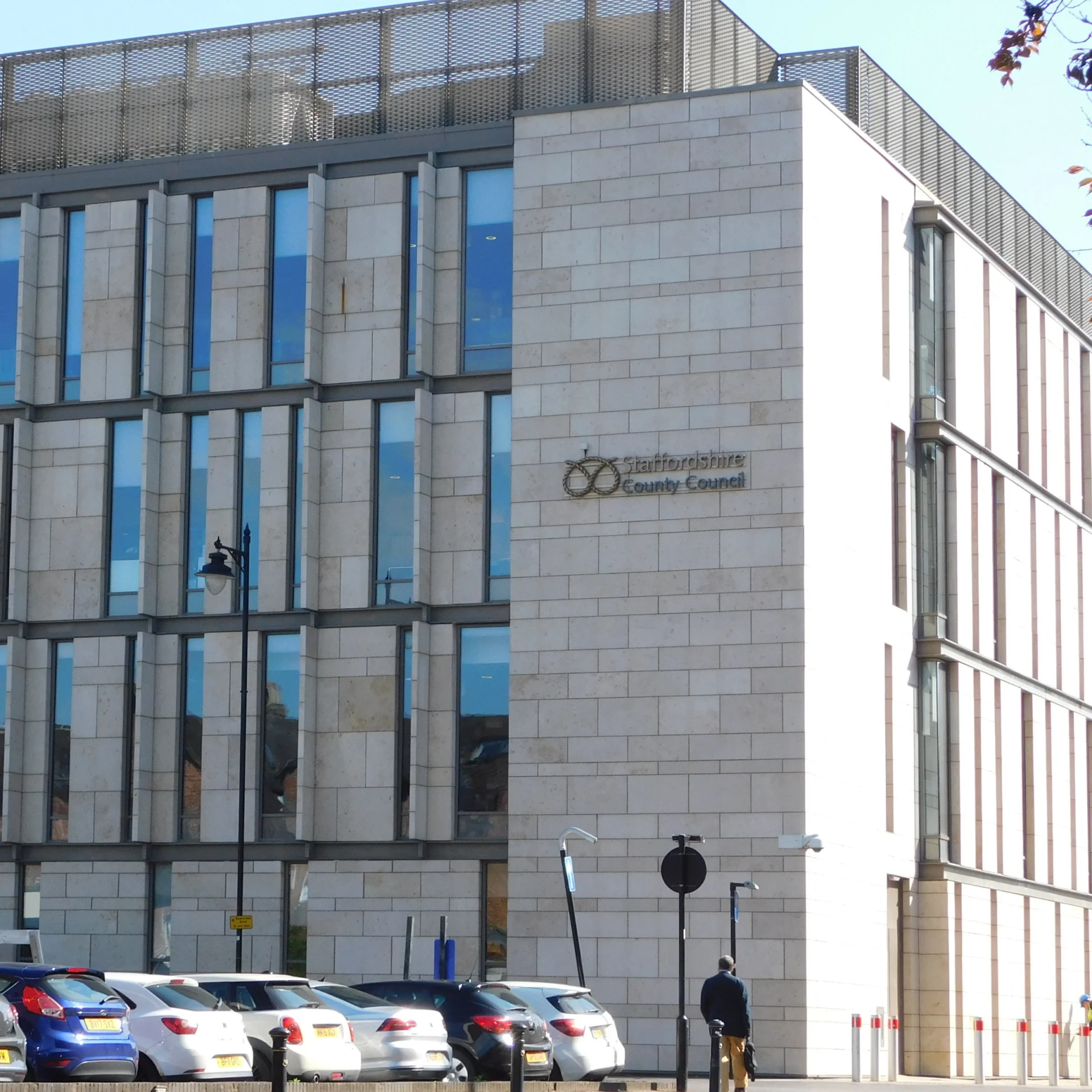
The way Staffordshire County Council achieved a £6.7m underspend has been questioned, after councillors were told reserves were used to help two major service areas balance their budgets.

The authority finished the 2025/26 financial year £6.696m below its overall budget, but councillors examining the figures questioned how much of that could be considered a genuine, sustainable saving.
The financial outturn was described as an “excellent achievement” in a report presented to the Reform UK cabinet.
Reform took control of Staffordshire County Council in May 2025. The following month, national party leader Nigel Farage visited County Buildings in Stafford and spoke about plans to send software engineers, data analysts and forensic auditors into the authority to identify potential savings.
Speaking shortly after his election to the county council, Sean Bagguley, now cabinet member for finance and resources, said
“I’m a great fan of going through the council and auditing them – we need an audit.”
At the latest Corporate Overview and Scrutiny Committee meeting, Councillor Bagguley said
“We delivered a £753m budget with a small surplus in the face of rising costs for fuel, materials, wages and a very stubborn CPI (consumer price index). This delivered an outturn underspend of £6.696m, whilst at the same time ensuring that our obligations were met.
“It included a £330m spend on adult social care, £223m on services for vulnerable children and families and also investments of £74m in highways and £29m in new and improved schools.”
But councillors questioned what sat behind the headline underspend.
Councillor Craig Humphreyson said
“The £6.696m underspend is very commendable, especially with it being the first year that we’ve been in charge. However, some of it does seem to be one-off benefits or being dependent on the reserves that are being used.
“Of the underspend, how much of it is genuine, sustainable savings? And what are the plans for areas like children and families that have been reliant on reserves as they can’t be used in the long run?”
The committee was told the use of reserves in health and care had been planned as part of the council’s Medium Term Financial Strategy, or MTFS, and that the ongoing use of those reserves was expected to reduce to zero during the lifetime of the strategy.
Reserves were also used to offset pressures within children and families services.
The underlying overspend on children’s placements was around £4.5m and was continuing into the current financial year, although councillors were told a financial recovery plan was in place.
Councillor Philip White said the council had been in a strong financial position for many years, but questioned how much of the reported underspend represented a lasting reduction in costs.
He said
“However this underspend, there is a very small element that is genuinely what we would call a bankable saving. I don’t think there’s any recurring savings here.
“I think the majority of it is down to lower energy costs we accounted for when we were setting the MTFS because energy prices haven’t been as high, it’s lower wage inflation, less money spent on concessionary fares for bus travel and a variety of other one-off underspends where we simply haven’t used the budget as allocated.
“At the same time, we’ve got £6.7m of reserve for health and care that’s been used – that was planned – but we need to be clear that is slightly more than the reported underspend on its own.”
Councillor White also highlighted the continuing financial pressure caused by children requiring council care.
He said
“The point I really wanted to focus on was the overspend in children and families; we need to provide what our children need and if we have vulnerable children who require services from the council or be taken into our care we need to find the money for that.
“But we’ve got an overspend there of £4.5m that’s come from reserves and from my understanding that’s not likely to be a one-off.”
Councillor Bagguley said the issue required “structural change”.
He said
“You can’t continue to have such high impact expenditures on a recurring basis because it’s just not sustainable. A large part has been brought about by sudden increase, which wasn’t included in the original business plans of children in care.
“There’s only variables as far as that’s concerned and that’s the cost of the care or the number of children going into care. The cost of care will play a large part in what we’re looking at in terms of cost recoveries and sorting this out.”
He added that the number of children entering care had risen sharply and said the council was putting monthly monitoring in place.
Councillor Ian Cooper also questioned whether further efficiencies could be found within the council itself, with money redirected towards services such as children’s care.
Councillor Bagguley responded
“We have been doing a lot of work on efficiency. A large bit of work was done on limiting agency spend on areas where that was possible to do.
“We should be doing everything in the most efficient manner possible. However we do need to be mindful of the fact we have the LGR (local government reorganisation) work we have to do down the line as well.”
The scrutiny discussion makes an important distinction between an underspend, where less money was spent than had been budgeted, and recurring savings that would permanently reduce the council’s cost base in future years.
That distinction is likely to remain under scrutiny as Staffordshire County Council deals with continuing pressures in children’s services alongside preparations for local government reorganisation.

See more A Little Bit of Stone in Google
Add A Little Bit of Stone as a Preferred Source to make our stories more likely to appear when you search Google.


Related Posts: