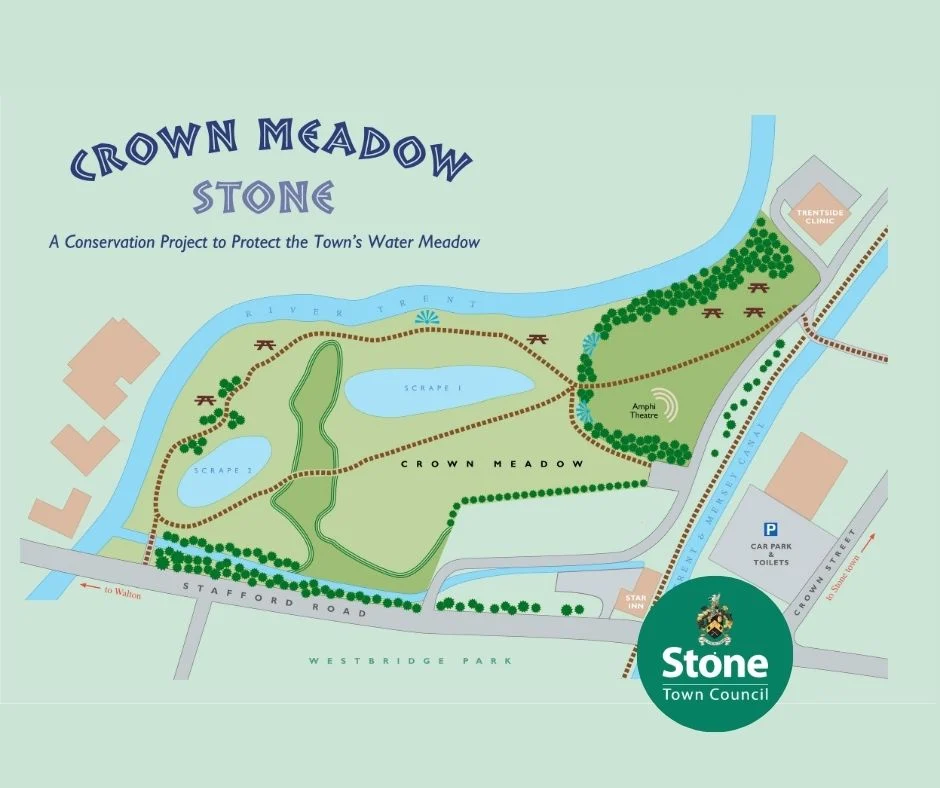

Councillor Robert Townsend, Chairman of Stone Town Council’s Environment Sub-Committee, shares an update on Crown Meadow.
MANAGING THE WETLAND SCRAPES
The two wetland scrapes, an important feature of Crown Meadow, underwent extensive management work last year to address the build-up of willow saplings, dominant grasses and accumulated silt.
Although these interventions appeared dramatic and destructive at the time, the work was essential and the benefits are now clearly visible. The scrapes are again supporting a vibrant range of plant life, including species that had previously been suppressed by overgrowth.
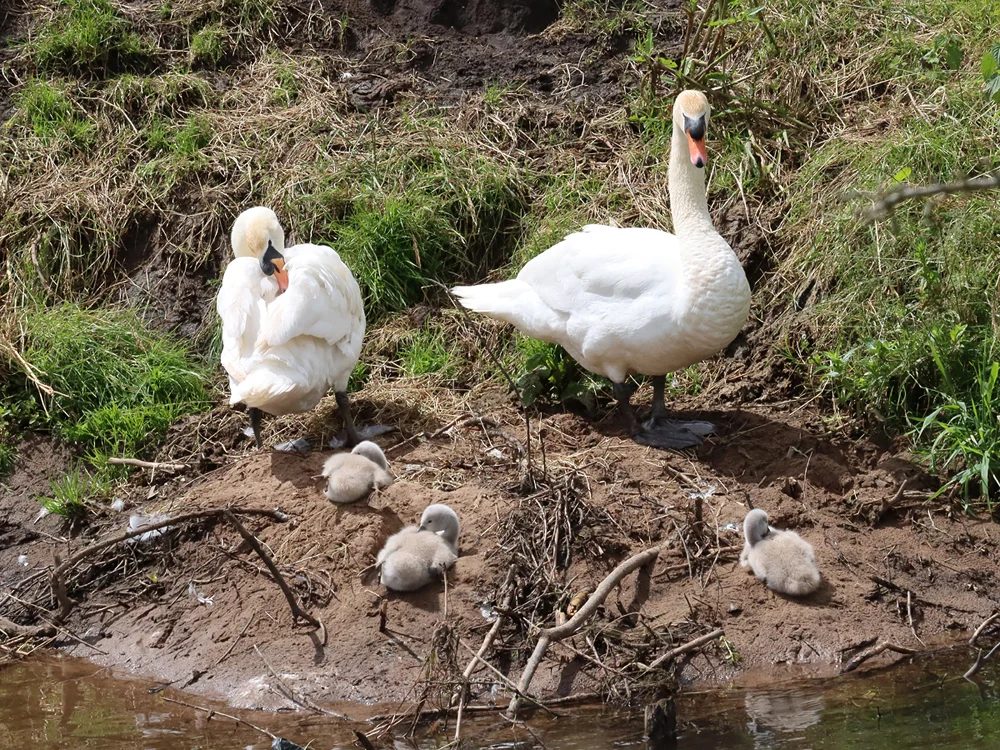
If you have visited Crown Meadow recently you may have seen that Mute swans have returned to nest in the scrape and have successfully hatched seven cygnets.
The work has also restored the capacity of the scrapes to store floodwater, helping the meadow continue to perform its valuable role in natural flood management.
FOOTPATH IMPROVEMENTS
The diagonal path that crosses the meadow is frequently submerged during periods of flooding, forcing walkers to divert across muddy ground. This damages the meadow and creates difficult conditions for visitors.
To address the problem, the path will be raised slightly, helping it stay drier for longer and improving drainage. These works form part of Stone Town Council’s ongoing programme of maintenance and enhancement, ensuring Crown Meadow remains both a valuable wildlife habitat and an attractive place for people to enjoy.
FLORA AND FAUNA
The meadow supports a wide range of flora and fauna and is an important part of the Trent Valley wildlife corridor.
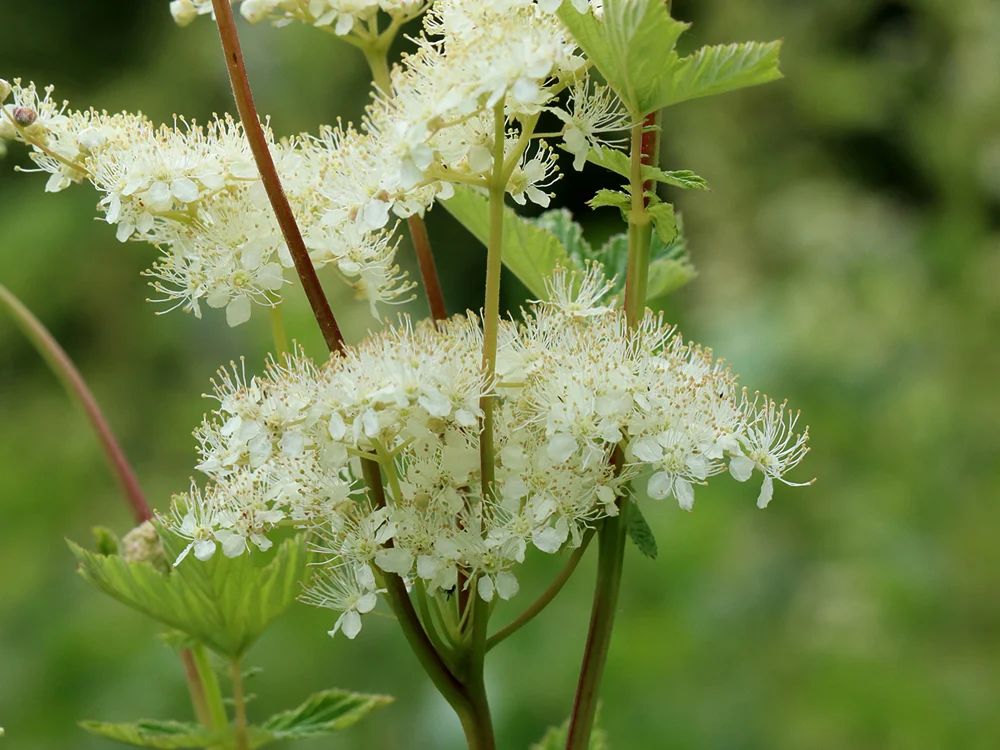
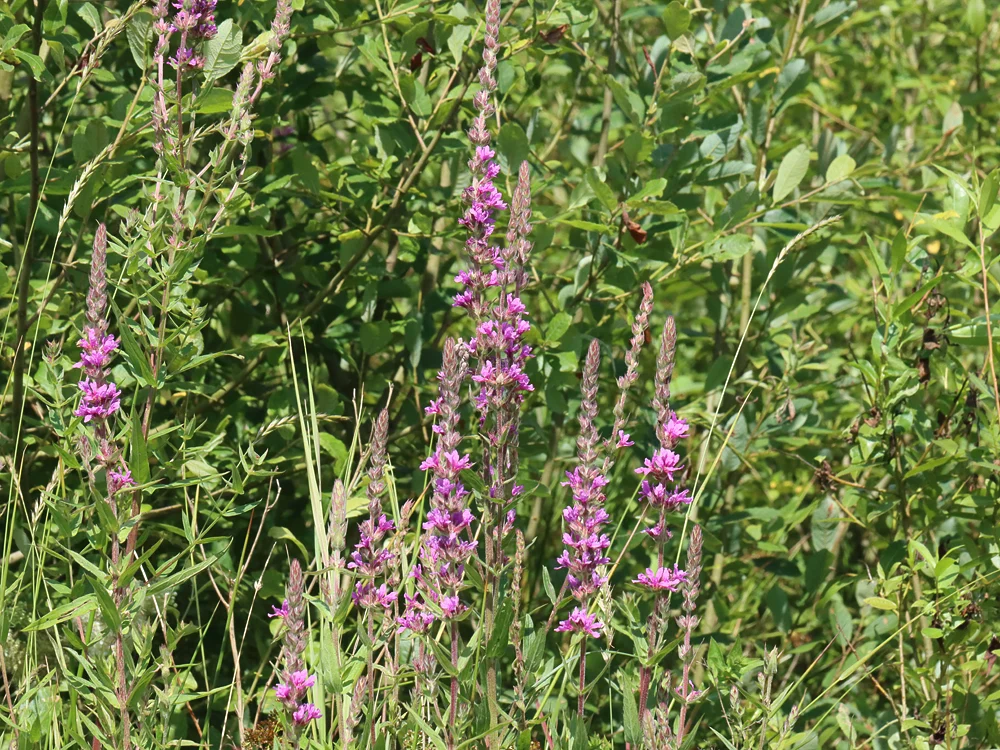
A pair of Dippers have successfully nested – an amazing event that would have been unthinkable just 10 years ago and is a good indication of the health of the Trent and Scotch Brook The species found here are largely influenced by the presence of water. During Summer and Autumn there are many plants associated with damp habitats for visitors to look out for on Crown Meadow, such as Meadowsweet, Purple Loosestrife, Tansy and Great Willowherb.
HIMALAYAN BALSAM – TAKING ACTION AT CROWN MEADOW
Rivers, streams and valleys across England are experiencing a rapid spread of Himalayan Balsam, and Crown Meadow is no exception. The invasive plant has become established along the banks of the River Trent and Scotch Brook in Crown Meadow, and the affected areas have been expanding year on year.
Originally introduced to Britain as a garden plant in 1839, Himalayan Balsam quickly escaped cultivation and became widespread along riverbanks, ditches and wetlands. Its fast growth allows it to form dense stands that crowd out native plants by competing for light, water and nutrients and reducing the diversity of other species that are vital for a healthy ecosystem.
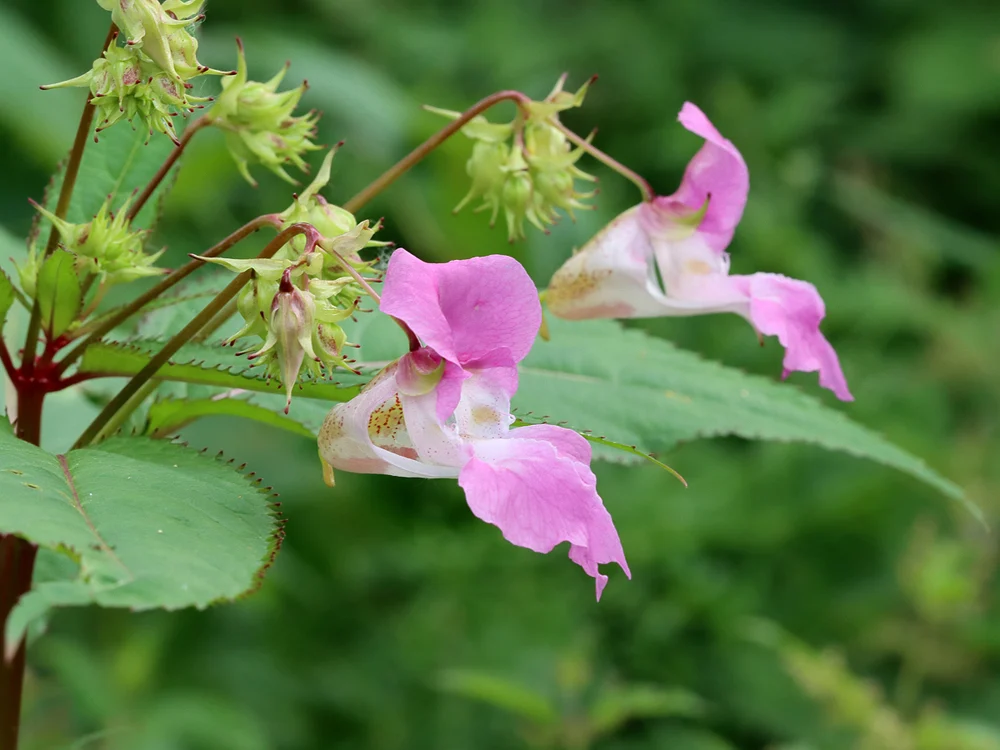
In response to the growing problem, Stone Town Council established a volunteer group in 2025 to tackle Himalayan Balsam across Crown Meadow. Their efforts have already delivered encouraging results. Areas cleared last year are now largely free of the plant, with a range of native species beginning to recover and flourish once again.
The work has continued in 2026 and will remain an important part of the meadow’s management in the years ahead. Although complete eradication is unlikely, sustained annual action can significantly reduce its impact and help limit the spread of seeds downstream through the Trent Valley.
For more information on Crown Meadow
- Visit www.stonetowncouncil.gov.uk/about
- Crown Meadow – Anglers Car Park
- What 3 Words – resembles.goggle.originate
- Sat Nav – ST15 0GY
There is other parking available in the town, details can be found www.stonetowncouncil.gov.uk/car-parking